Dify vs n8n vs Flowise: Which Is Best for Enterprise Software Teams in 2026?
Dify vs n8n vs Flowise for enterprise teams: compare automation, AI workflows, security, pricing, and fit by use case. Learn
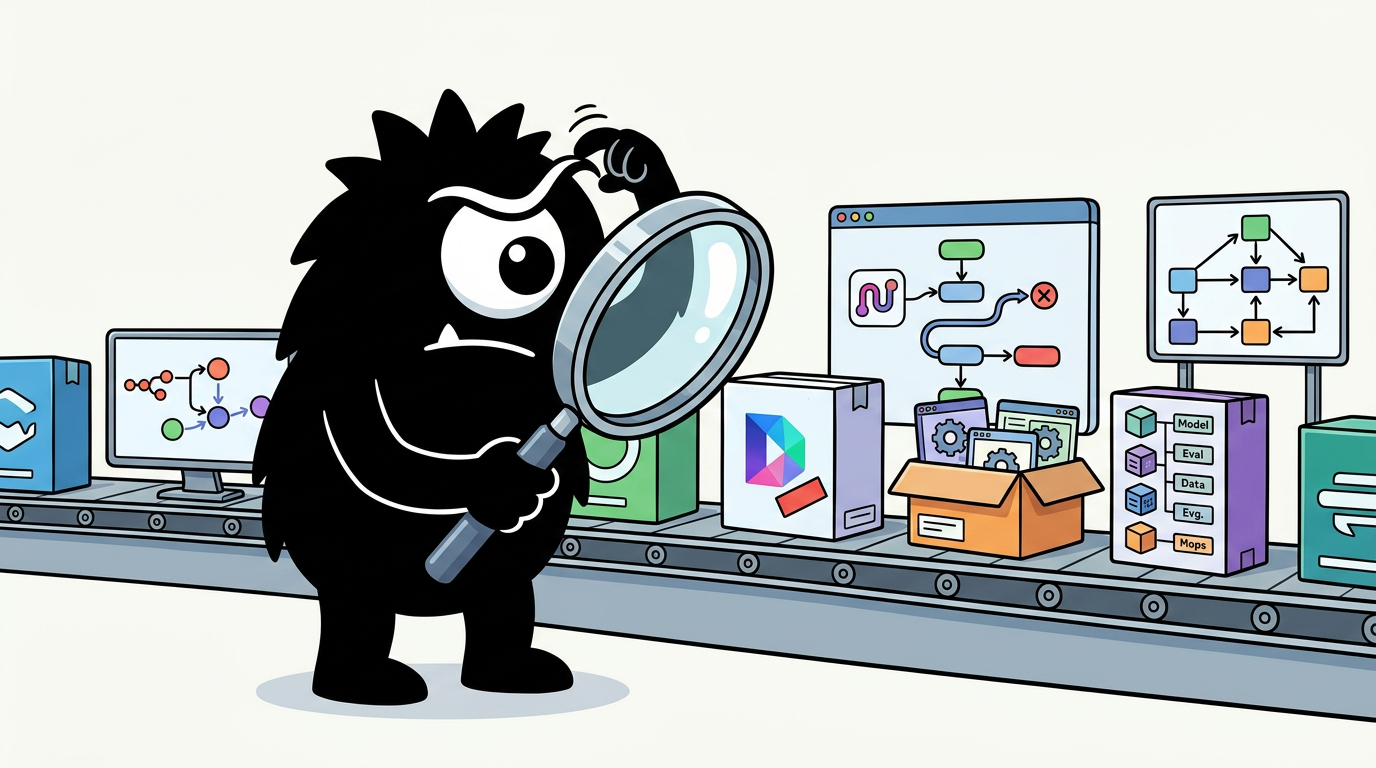
Why Enterprise Teams Are Suddenly Comparing Dify, n8n, and Flowise
At first glance, this is a strange shortlist.
Dify is primarily an AI application platform: chatbots, knowledge assistants, RAG pipelines, and agentic workflows wrapped in a product-like interface.[12] n8n started from workflow automation: triggers, schedules, APIs, and actions across business systems, then added AI nodes and agent capabilities on top.[2] Flowise is the visual LLM-chain and agent canvas: fast to wire up, easy to prototype, and increasingly used by teams that want more direct control over model-centric logic.[1]
So why are enterprise software teams evaluating all three at once?
Because the practical problem has converged. Teams no longer want “an LLM demo” or “just another automation tool.” They want a system that can connect models, data sources, internal knowledge, and operational software in one deployable workflow. That’s why the market keeps collapsing these categories into the same buying discussion, even when the products were built with different center-of-gravity assumptions.
Dify vs n8n: which one for your AI app?
Dify (146K stars): LLM apps with RAG + an embeddable knowledge-base chatbot. n8n (194K stars): 400+ integrations. Plus connect Dify to OpenRouter: hundreds of models, one key.
https://pasqualepillitteri.it/en/news/6300/dify-vs-n8n-openrouter-guide
#AI #opensource #LLMOps
The X conversation captures that convergence well. People are not just asking which platform is “best”; they’re asking why an AI app builder, an automation engine, and an agent workflow tool all keep showing up in the same budget conversation.
Dify vs Flowise vs LangFlow: The 2026 Guide to Agentic Workflows https://interconnectd.com/forum/thread/175/dify-vs-flowise-vs-langflow-the-2026-guide-to-agentic-workflows/?utm_source=dlvr.it&utm_medium=twitter
View on X →AIの力で業務を自動化したい人へ
「n8n」vs「Dify」2つのワークフローツールを徹底比較!
ブクマして自分の業務にはどちらが最適なのか確認しよう↓
For enterprise teams, the right evaluation criteria are not GitHub stars or who launched the slickest demo. They are:
- Use case fit: automation backbone, AI product interface, or agent experimentation
- Security and governance: RBAC, SSO, access controls, auditability
- Integration depth: SaaS connectors, APIs, vector stores, model providers
- Operating model: cloud, self-hosted, hybrid, platform-team-owned, or app-team-owned
Those are the axes that actually decide whether the platform ships to production or stalls after a promising pilot.[1][3][12]
Start With the Goal: Do You Need Closed-Loop Automation or an AI Application?
This is the most important distinction in the entire comparison, and many teams still get it wrong.
If your goal is to eliminate manual steps across systems — receive an event, transform data, call an LLM, update records, notify the next owner — you are mostly buying automation. If your goal is to give users a chatbot, internal copilot, search experience, or knowledge assistant, you are mostly buying an AI application.
That sounds obvious, but in practice teams often choose based on “AI vibes” instead of execution model.
Difyに怒られちゃうかもしれないけど、中小企業はDifyよりn8nを導入した方がいいと思う派。理由を解説していきます。
①n8nのが「完全自動化」に近い
Difyとn8nはそもそもプロダクトの思想が違う。Difyは人が介在する前提かつ対話型アプリに強いが、n8nはトリガーベースのワークフロー自動化に特化している。
例えばn8nならGoogleドライブへのファイルアップロードを検知→LLMで文字起こし、要約→Notion保存までを全自動化できる。Difyでもできなくないが、Difyはトリガー機能が弱い。
他にも毎週月曜日の朝8時に財務諸表を分析して、経営陣にメールでレポートを送付する、とかもできる。DifyもCronプラグインとか出たけど、不安定だし、使いにくい。
②n8nなら「作ったけど使われない」問題を回避する
Salesforceを導入しても営業が入力しないのと同じ構図で、便利なAIツールを作って社内展開しても、人間は基本的に面倒くさがりな生き物なので使わない。
例えばDifyで議事録ツールを作っても、Difyにアクセスして、議事録を生成するという一手間がボトルネックになり、結局使われなくなる。
人が介在しない、依存しないワークフローをいかに設計できるかがAI推進の重要な論点だと思う。
③厳格性が必要ないタスクこそn8nが向いている
厳格性、正確性が求められるエンプラと違い、中小企業はクオリティを許容できる。
AIは70~80点の精度で業務効率化するのは得意だけど、100点の精度にもっていくには相当ハードルが高い。
「雑でも効率化できればいい」というタスクはn8nがめちゃくちゃ向いていると思う。
逆に人の承認を得たいとか、対話しながら出力精度を上げたい、みたいな場合はDifyの方がいいでしょう。(例えば記事制作とかそういう類のツール)
ただn8nはセルフホスト版の制約が強すぎるのよね…そこだけ難点。セキュリティリスクが許容できる、クラウド版でもいいよって人はn8n一択だと思う。
詳しく知りたい人は8月にDifyとn8n、Opalのウェビナーをやるので参加してみて。
That post gets to the heart of the n8n case. n8n is strongest when the workflow starts from a trigger:
- a new file in Google Drive
- an inbound webhook
- a CRM record change
- a scheduled finance report
- an email, support ticket, or form submission
From there, n8n shines at moving data through systems and closing the loop automatically. Its strength is not just that it can call an LLM; it’s that it can make the LLM part of a broader operational pipeline.[2][5]
Most teams don’t need another dashboard—they need workflows that close loops. We use n8n to route inbound requests, auto-enrich leads, and trigger owner follow-ups in minutes. Less status meetings, more shipped ops.
View on X →That “close loops” framing is the cleanest buying heuristic in this market. Most teams do not need another internal dashboard where someone has to remember to log in and click “generate.” They need a workflow that fires on its own, routes work, enriches records, and hands off to the next system without introducing a new habit burden.
Dify is different. It is strongest when the thing you are shipping is itself an AI experience: an internal knowledge bot, a documentation assistant, a support copilot, a guided agent, or a RAG-backed chat app. Dify includes more of that app stack out of the box: prompt orchestration, knowledge ingestion, model routing, APIs, and application-facing patterns that feel closer to “product assembly” than “workflow plumbing.”[12][2]
Flowise sits somewhere else again. It is useful when the team wants to visually compose agent logic quickly — tools, prompts, chains, branches, retrieval, multi-step reasoning — without immediately committing to a full automation backbone or opinionated AI app layer.[1][12] It is often the fastest route to “can we make this agent behavior work?”
Built an AI agent in n8n that:
→ Hits Apollo API
→ Pulls VPs of sales
→ Researches + scores leads
→ Writes custom openers
→ Slacks hot leads to sales team
5 leads researched in 5 seconds. Runs every morning automatically.
This is how you
But that does not make Flowise a replacement for n8n’s broad business orchestration, nor does it make n8n a substitute for a polished AI app stack. Start with the job, not the feature grid.
The Real Enterprise Decision Axis: Cross-System Orchestration vs LLM-Native Execution
One of the sharper arguments emerging on X is that this is not really a fight about superiority. It is a question of architecture.
「Dify・n8nはもう古い?」という問いの答えは、ツールの優劣ではなく構造の違いにありました。
選択の軸は1つ。複数クラウドサービスをつなぐのか、LLM処理がローカルで完結するのか。ここで使い分けが決まります。
#AIワークフロー #コーディングエージェント #判断支援
That’s exactly right.
If your organization is SaaS-heavy — Salesforce, HubSpot, Slack, Google Workspace, Notion, Jira, Zendesk, NetSuite — then your problem is usually orchestration across cloud systems. n8n fits naturally here because it was built around triggers, connectors, transformations, and workflow execution across external services.[2][1]
If your organization is building internal AI products — assistants, retrieval systems, model-heavy workflows, domain-specific copilots — then Dify and Flowise often map better because they are more LLM-native in how they think about execution. They assume the model interaction is the center, not just one node in a larger business workflow.[1][3]
Self-hosted AI agent platforms - who's winning:
• Dify (75K+ ⭐) - chatbots and much more, mature, feature-rich
• LangGraph - event-driven, production-ready
• AutoGPT - rebuilt as proper agentic platform w/ visual builder
• Flowise - drag-and-drop, fast to prototype
• n8n - automation + AI in one
• Hermes Agent - best for agentic workflows
Pick based on your needs, start building.
Deployment patterns reinforce that split. In self-hosted environments, teams commonly assemble a stack around these tools:
- n8n for orchestration
- Dify or Flowise for AI interaction logic
- Qdrant or Weaviate for vector search
- Ollama or vLLM for local models
- Langfuse and Grafana for tracing and observability
2) What you get in 15 minutes:
- n8n in production mode (queue + Redis)
- Ollama + Open WebUI for local LLMs
- Flowise & Dify for AI workflows
- Qdrant, Supabase, Weaviate for RAG
- Grafana + Langfuse for monitoring
- 30+ tools total — you pick what you need
That hybrid pattern matters more than many product marketers admit. In real enterprise stacks, the answer is often not “pick one forever.” It is:
- Use n8n as the control plane for business events and cross-system actions.
- Use Dify or Flowise where you need richer AI interaction, retrieval, or agent behavior.
- Connect them via API or webhooks.
This architecture gives teams a clean separation: operational workflows stay deterministic where possible, while AI-heavy components remain isolated and replaceable. It also reduces the temptation to stretch one platform beyond its natural shape.[1][2][3]
Security, RBAC, and Governance: Where Enterprise Buyers Should Be Most Skeptical
This is where the comparison gets uncomfortable, especially for Flowise.
Flowise has built real momentum because it is easy to understand, visual, and productive for agent prototyping. But enterprise buyers should not treat prototyping speed as evidence of production readiness. Recent public vulnerability chatter fundamentally changes the risk calculus for security-sensitive deployments.
Flowise versions prior to 3.1.2 contain a critical remote code execution flaw tracked as CVE-2026-56274, scoring 9.9 on CVSS and enabling attackers to execute arbitrary commands on the host via the Custom MCP Server feature.
View on X →CVE-2026-58057
Authenticated Arbitrary Code Execution in Flowise Before 3.1.3 via Case-Sensitive Environment Variable Validation
https://vulmon.com/vulnerabilitydetails?qid=CVE-2026-58057
🌊 Flowise users: CVE-2025-71338 is a CVSS 10 path traversal letting unauthenticated attackers write arbitrary files and chain to full RCE via the document-store API. No auth needed. Patch now.
#AppSec #CyberSecurity
https://secalerts.co/vulnerability/CVE-2025-71338?utm_campaign=x
🚨 CRITICAL - Flowise unauthenticated account creation via exposed registration API (CVE-2025-71327)
Flowise exposes an unprotected /api/v1/account/register endpoint in its API layer that allows anyone to register new user accounts without prior authentication. The issue stems from missing access control/improper authentication enforcement on the registration route, effectively creating an authentication bypass. An unauthenticated attacker can remotely hit the endpoint over HTTP to create an account, then log in normally and operate as a valid user without any legitimate credentials. If exploited, this results in full API access under attacker-controlled accounts, enabling unauthorized data access and potential takeover of workflows, integrations, and connected resources.
👉 Affected: flowise (version range not specified) | Upgrade to vendor-fixed release (not specified)
Even if your security team validates patches and version scope carefully before making a final judgment, the signal is hard to ignore: Flowise now carries a higher perceived operational risk than many enterprise teams will tolerate for broad internal rollout. When multiple severe issues center on code execution, path traversal, and account creation, the burden of proof shifts to the buyer. “Fast to prototype” stops being enough.
This doesn’t mean Flowise is unusable. It means it should be treated like a powerful component that requires stricter segmentation, patch discipline, and review than teams often assume when they see a visual builder.
By contrast, n8n has clearer enterprise governance framing in official documentation, including role-based access control for user management.[7] That matters because RBAC is not a checkbox feature; it is what allows platform teams to let multiple business units build safely without sharing full administrative power.
Flowise does document authorization and workspaces, which is important and better than many early-stage tools in this category.[8][9] But documentation parity is not the same thing as enterprise confidence parity. Buyers need to ask tougher questions:
- How mature is tenant separation?
- What is the blast radius of a compromised credential?
- How are secrets stored and rotated?
- What logs are available for investigations?
- How quickly are security fixes shipped and adopted?
Dify lands somewhere in the middle. It has application-facing access control mechanisms and is increasingly credible as a self-hosted AI app platform.[10] But enterprise buyers should pay close attention to licensing and tier boundaries for governance features. In practice, many self-hosted AI tools look enterprise-ready on paper until you discover that the features security and IT actually care about — SSO, team isolation, advanced management, support guarantees — depend on higher tiers or enterprise terms.[4]
That issue is not unique to Dify. It affects all three platforms differently:
- n8n: mature workflow governance story, but self-hosted limitations and enterprise controls may shape the edition decision.[7][2]
- Dify: strong AI app posture, but buyers must validate what governance features are available in their intended deployment model.[4][10]
- Flowise: feature-rich for builders, but current security perception is the biggest obstacle to enterprise trust.[8][9]
For regulated teams, the takeaway is blunt: do not evaluate these products as if they are equally production-hardened. They aren’t.
Use Cases That Actually Decide the Winner
Abstract comparisons are useful up to a point. Real buying decisions usually get made by one or two high-value workflows.
n8n wins when the ROI comes from unattended operations
If the business outcome is “remove humans from repetitive coordination work,” n8n is usually the best fit.
Common examples:
- lead intake, enrichment, scoring, and routing
- scheduled financial reporting and distribution
- support triage and escalation
- file-triggered transcription, summarization, and storage
- CRM, help desk, and messaging workflows that must run automatically
Took 20 hrs/week off an agency owner with a 4-agent team (not one mega-bot):
monitor → research/verify → execute → watchdog that pings before anything breaks
$6k build · ~$200/mo
One mega-prompt is fragile. Single-job agents aren't.
Comment STACK for the n8n build.
🤖 Gartner: 40% of enterprise apps now embed AI agents — and you don't need to code to build one. Tools like n8n, Gumloop & Zapier let anyone deploy smart workflows in minutes. The future of work is no-code + AI. 🚀 #NoCode #AI #Automation #TechTrends #Innovation
View on X →Built an AI agent in n8n that:
→ Hits Apollo API
→ Pulls VPs of sales
→ Researches + scores leads
→ Writes custom openers
→ Slacks hot leads to sales team
5 leads researched in 5 seconds. Runs every morning automatically.
This is how you
These examples all share the same pattern: the AI is useful, but the real value comes from what happens before and after the model call. Who gets notified, what system gets updated, what record changes status, what follow-up is created. That is n8n territory.[1][2]
Dify wins when the deliverable is the AI product itself
If you are building an internal assistant, searchable knowledge interface, RAG-backed support bot, or domain-specific chat product, Dify often wins because more of the app-layer infrastructure is built in.
DROP EVERYTHING.
This GitHub repo just hit 136K stars and it’s the fastest way to ship an AI app:
Dify helps you go from prototype to production without writing 1,000+ lines of glue code and using 6 other tools.
Here’s what it handles for you:
1. RAG pipelines:
Built-in hybrid search (BM25 + vector), chunking, and support for PDFs, Notion, DOCX, web scraping.
2. Agent orchestration:
Visually build ReAct-style workflows using tools, API calls, and logic blocks - no manual loops in Python.
3. Model routing:
Easily switch between GPT, Claude, or local models like Llama via Ollama/vLLM.
4. Auto-generated APIs:
Every saved workflow gets an auto-generated REST endpoint, ready to integrate.
5. LLMOps & monitoring:
Full tracing, latency, token usage, and annotation support - ready for production.
No more stitching together LangChain, FastAPI, vector DBs, and monitoring tools. Think of Dify as the missing infrastructure layer between your AI logic and a real product.
You can self-host it or use their cloud. 100% free to start.
That post is a little breathless, but the core point is valid: Dify reduces glue code for teams that would otherwise stitch together retrieval, prompt orchestration, API exposure, model switching, and basic observability across multiple components. For software teams trying to ship an AI app rather than an automation pipeline, that compression matters.[12][6]
Flowise wins when speed of agent design matters more than broad platform guarantees
Flowise is compelling for experimental multi-agent flows, visual prompt logic, and rapid proof-of-concepts. If your AI engineers want to test different tool-use patterns, chain topologies, or retrieval logic quickly, Flowise can be an effective workbench.[1][11]
But the enterprise caveat is unavoidable: prototype there if you want, yet don’t confuse a successful proof-of-concept with a production endorsement. In many organizations, the eventual production architecture will migrate the winning logic into a more tightly governed runtime or put it behind stricter controls.
Pricing, Learning Curve, and Team Shape: What Looks Cheap Can Become Expensive
Sticker price is the least important cost in this category.
The bigger costs are:
- self-hosting and infrastructure ownership
- upgrades and patch management
- secrets management and security hardening
- observability, tracing, and incident response
- internal platform support for builders
n8n or Make?
n8n: AI agents, RAG, custom code, self-hosting.
Make: faster setup, 3,000+ connectors, easier for non-technical teams.
Compare workflow steps and monthly runs—not plan headlines.
Read AI Promix: https://www.aipromix.com/2026/06/n8n-vs-make-ai-automation-workflows.html
#n8n #Automation
That advice about comparing workflow steps and runs rather than plan headlines applies here too. A “free” or low-cost self-hosted deployment becomes expensive fast if your platform team has to own uptime, auth integration, security patching, and support for multiple internal teams.[1][4][6]
The learning curve also varies by persona:
- Ops builders and RevOps teams usually grasp n8n fastest because its mental model is events and actions.
- AI engineers and product teams often prefer Dify because it packages common AI app concerns in a more product-oriented way.
- Prompt engineers and experimental builders may move fastest in Flowise because the canvas is optimized for trying agent logic visually.
The hidden adoption risk is worth stressing. A technically elegant Dify app can still fail if users must remember to visit another interface. Likewise, a sophisticated n8n workflow may underdeliver if no one on the team can safely maintain it. Tool choice should reflect not just build speed, but who will operate it six months later.[1][4][6]
Why Dify Feels Bigger in Some Markets Even When n8n Dominates Other Conversations
Some of Dify’s visibility is product-driven. Some of it is go-to-market.
「なんで日本だけDify?」って思ってたけど、理由が完全に“戦略の勝利”。
英語圏はn8nとGumloop。なのに日本はDifyが強い。その裏には、徹底ローカライズと代理店、Meetup連打でユーザー巻き込む設計があった。
ツールの性能じゃなくて、“動かし方”で差がついてる。
That observation tracks with what many enterprise buyers miss: internal familiarity often comes from localization, partner channels, meetups, and community education as much as from raw capability. In some regions, Dify has become the default mental model for “AI workflow builder,” while n8n remains the stronger reference point in automation-heavy and English-language operator circles.[1][12]
Flowise, meanwhile, has a different brand entirely: hacker-friendly, visual, experimental, and attractive to people who want to manipulate agent behavior directly.[11]
The practical advice is simple: don’t confuse market buzz with architectural fit. Popularity explains why a tool is on your shortlist. It does not decide whether it belongs in production.
Who Should Use Dify, n8n, or Flowise?
Here’s the decisive version.
Choose n8n if:
- your main goal is end-to-end automation across business systems
- workflows start from events, schedules, APIs, or file changes
- you want AI embedded into operational processes, not exposed as a standalone app
- your biggest ROI comes from closing loops automatically[1][2][3]
Choose Dify if:
- your main goal is to build production AI apps, chatbots, and RAG assistants
- the user experience is conversational or search-driven
- you want more of the AI app stack built in, with less glue code around retrieval, APIs, and model routing[2][10][12]
Choose Flowise if:
- your team needs fast prototyping for agent workflows
- you want a highly visual environment for experimenting with tools, prompts, and multi-step logic
- you are prepared to do extra security validation, restrict exposure, and treat production rollout cautiously[3][11]
If you want one sentence: n8n is the best automation backbone, Dify is the best AI app platform, and Flowise is the best experimental agent canvas — but only one of those should be your default enterprise answer without heavy qualification.
For most enterprise software teams in 2026, that default is n8n for operational automation and Dify for user-facing AI applications. Flowise earns a place in the lab, not automatically in the core platform stack.
Sources
[1] Flowise vs Dify vs n8n: AI Agent Builder Comparison
[2] N8N vs Dify: A Deep Comparison for Developers Who Actually Build Things
[3] n8n vs Flowise vs Langflow: Which Tool Should Enterprises Choose in 2026?
[4] Question About Differences Between Self-Hosted Plans for Dify
[5] Comparison of AI Agent Platforms: Tovie Platform, Dify, and n8n
[6] Best Dify AI Alternatives in 2026 (Feature & Pricing Comparison)
[7] Role-based access control (RBAC)
[8] Auth
[9] Workspaces
[10] Access Control
References (15 sources)
- Flowise vs Dify vs n8n: AI Agent Builder Comparison - jahanzaib.ai
- N8N vs Dify: A Deep Comparison for Developers Who Actually Build Things - levelup.gitconnected.com
- n8n vs Flowise vs Langflow: Which Tool Should Enterprises Choose in 2026? - huggingface.co
- Question About Differences Between Self-Hosted Plans for Dify - github.com
- Comparison of AI Agent Platforms: Tovie Platform, Dify, and n8n - tovie.ai
- Best Dify AI Alternatives in 2026 (Feature & Pricing Comparison) - noxus.ai
- Role-based access control (RBAC) - docs.n8n.io
- Auth - docs.flowiseai.com
- Workspaces - docs.flowiseai.com
- Access Control - docs.dify.ai
- Flowise - Build AI Agents, Visually - flowiseai.com
- Dify: Leading Agentic Workflow Builder - dify.ai
- n8n vs Dify vs Flowise [2026 UX Review for AI Agents] - rapidclaw.dev
- n8n vs Dify for AI - cyprien.io
- Best Dify Alternatives for AI Workflow Automation - getdynamiq.ai
Related Guides

Fly.io vs ClickUp: Which Is Best for Customer Support Automation in 2026?
16 min read
Perplexity AI vs Google Gemini vs xAI Grok: Which Is Best for Customer Support Automation in 2026?
19 min read
Notion vs Fly.io vs Jira: Which Is Best for Developer Productivity in 2026?
16 min read
Amazon Q Developer vs Replit vs Claude Code: Which Is Best for Code Review and Debugging in 2026?
20 min read