What Is Cursor AI? A Complete Guide for 2026
Cursor AI review for 2026: pricing, features, agent workflows, trade-offs, and who should actually pay for it. Find out
Why Cursor Matters in 2026
Cursor matters now because it is no longer being judged as a clever autocomplete plugin. It is being judged as a paid production tool that can change how software gets built.
That shift is the most important thing to understand. Traditional coding assistants helped with line completion, boilerplate, and occasional code explanations. Cursor’s promise is bigger: describe intent, delegate implementation, review the result, iterate with an agent, and keep moving. In other words, it is trying to move developers from manually writing most code to supervising an AI-assisted implementation loop.[2]
That’s why the conversation around Cursor feels different from the conversation around most AI dev tools.
Cursor is the only one most devs genuinely feel is worth paying for in 2026
View on X →Plenty of products are “impressive.” Very few become an actual budget line item. Cursor did, because enough developers found that it could compress real work: navigating large codebases, generating scaffolds, handling repetitive edits, and wiring features together faster than a normal IDE plus copy-paste into a chat tool.
But the market is also noticing that Cursor is drifting beyond a pure developer identity.
Notice how Cursor isn’t saying “for developers”. Just “Useful AI”.
Cursor will likely become a direct competitor to Codex and Claude Desktop.
- Their in app browser is great.
- Their composer model is good and fast for most tasks
They just need to render documents like cowork and codex, and I’d consider using it for most of my work (as a non-dev)
That post gets at a real strategic shift. Cursor increasingly looks less like “VS Code with AI” and more like a general agentic workspace with coding as its beachhead. Its browser, cloud execution, and broader workflow ambitions make it more comparable not only to coding tools, but to AI work surfaces such as Claude Desktop or Codex-style agent environments.[8]
So if you are asking whether Cursor is “worth it,” the right question is not just does it write good code? It is:
- Does it meaningfully reduce implementation time?
- Does it fit how your team validates output?
- And are you paying for an editor, an agent platform, or both?
Those distinctions matter more in 2026 than the marketing copy.
How Cursor Actually Works: Agent Mode, Composer, Skills, MCP, and Cloud Agents
To evaluate Cursor honestly, you need to understand the moving parts.
At its core, Cursor is still an editor. But layered on top of that editor is an increasingly agentic system: Agent mode, Composer, Rules, Skills, MCP server support, CLI tooling, and cloud-based execution workflows.[2]
Here’s the practical breakdown:
Agent mode
Agent mode is the “do the task” interface. Instead of asking for a snippet, you ask Cursor to inspect files, propose a plan, edit multiple files, run commands, and iterate. This is the closest Cursor gets to an autonomous software assistant rather than a code helper.[2]
Composer
Composer is the higher-level orchestration layer for multi-step changes. Think of it as a structured workspace for implementing a feature, not just answering a question. It is where Cursor feels most like an execution environment: prompt, inspect, generate, revise, and often test, all in one loop. CNBC’s reporting on Cursor’s major update described this broader push toward AI coding agents that can handle larger, multi-step tasks rather than just local suggestions.[5]
Rules and Skills
Rules let teams shape behavior: coding conventions, architectural constraints, style expectations, and repository-specific instructions. Skills package reusable capabilities or workflows so the system can repeatedly apply them across tasks.[2]
That matters because raw model intelligence is only part of productivity. In production teams, consistency matters just as much. A smart model that ignores your stack conventions often creates more cleanup than value.
TLDR:
- Cursor is now cheaper
- Cursor now supports skills
- Cursor is now even more autonomous
not gonna lie… this looks awesome!
That enthusiasm is understandable. Support for skills and greater autonomy pushes Cursor closer to being a repeatable workflow tool rather than a one-off code generator.
MCP servers and external tools
Cursor supports MCP, or Model Context Protocol, which lets it connect to external context and tools in a more structured way.[2] For advanced teams, this is a big deal. It means the agent can potentially pull from systems beyond the local codebase: internal docs, APIs, issue trackers, databases, or custom tools, depending on how you wire things up.
CLI and cloud agents
Cursor’s CLI support extends usage beyond the GUI editor, while cloud agents push execution into hosted environments.[2] That is part of why Cursor increasingly feels like a platform, not just an app.
The mobile and cross-surface story matters here too.
first thoughts with the new @cursor_ai ios app after working on https://mouse.dev/ for a bit:
>Design and feel is really nice.
>Choosing to use navigation stack is powerful in ios26 and removes the complexity of custom horizontal page views, animations, +more.
>NS tradeoff lacks gesture control and intuitiveness, replaced with logic and more concrete folder/repo/file hierachy navigation.
>Cloud agent cold start time seems well managed and tied into agent state animations, good UX, and will likely improve as the sandboxes infra matures.
>Overall ios26 integration is solid, notifications and live activity is really nice. And some forward thinking including native features like the camera, and screenshot selection from the attachments bottom sheet.
nice work @mntruell @ryolu_ and the mobile team.
And Cursor is clearly leaning into the idea that work can continue away from the laptop.
Imagine using your Cursor AI subscription to build, edit, and install an iOS app directly to your iPhone without the need of a computer so every vibecoding company will be out of business.
Yeah it is real and not just a mockup.
For some users, that will sound gimmicky. For founders, indie hackers, and operators who want to review, steer, or trigger work from anywhere, it is not gimmicky at all. It is a different model of development: one where the human increasingly acts as reviewer, planner, and approver, while the machine handles more of the implementation loop.
Where Cursor Delivers Real Value
The strongest case for Cursor is not “it replaces engineers.” It is that it amplifies engineers on tasks that are scoped, repetitive, and easy to validate.
That usually means:
- scaffolding new components or endpoints
- repetitive refactors across multiple files
- UI iteration
- debugging with fast edit-run loops
- writing tests or filling in missing test coverage
- codebase navigation and summarization
- converting plans into first-pass implementation
This is where agentic coding helps most. When the task is observable and the result can be checked quickly, Cursor can create real leverage. CNBC noted that Cursor’s latest capabilities include more autonomous workflows and testing-oriented execution, which is exactly where the product starts to feel materially different from a chatbot beside your editor.[5]
The hype on X is often excessive, but it points at something real.
cursor just made every $200/hour dev shop look like a clown
dropped composer 2.0 yesterday with agentic browser built in
what used to take 8 devs and 3 weeks now takes 8 AI agents running parallel in 30 seconds
and they TEST THEIR OWN CODE in a native browser
while coding bootcamps are charging $15K to teach you react, cursor's teaching AI to:
→ write code 4x faster than gpt-5
→ run 8 versions simultaneously to pick the best one
→ test in chrome devtools without leaving the IDE
→ iterate on bugs until they're actually fixed
→ plan with one model, build with another
the entire "hire a dev team" industry is sweating
some startup just replaced 3 junior devs ($450K/year) with cursor pro ($240/year)
that's a 99.9% cost reduction for better output
the intelligence gap between "we staffed up our eng team" and "we deployed cursor 2.0" is getting stupid
most companies still paying $150K/year for developers to do what this does for $20/month
chatgpt atlas? cooked
dia and comet? obsolete
traditional dev shops? praying you don't find out about this
comment "COMPOSER" and i'll send the full breakdown of how to replace half your dev costs with 8 parallel agents
your competition is still hiring. time to bury them.
No, most teams are not replacing eight developers with eight agents in 30 seconds. But parallel generation, browser-backed testing, and model specialization can compress work that used to involve multiple context switches. That matters for startup teams where the same person is product manager, engineer, QA, and support.
There is also a straightforward economic argument in Cursor’s favor for moderate users.
But no other ide gives access to composer 2.5, fable and other models like that.
From my understanding, Cursor probably gives around ~$150 of usage for a $20 subscription.
That sentiment shows up often because Cursor bundles access to multiple premium models and wraps them in a workflow layer that saves time. If your daily work consists of building features, debugging app behavior, and iterating quickly, the value is not just token access. The value is reduced friction:
- less copy-paste into separate chat apps
- less manual file hunting
- less context re-explaining
- faster edit/test cycles
- more throughput on boring work
Cursor’s own reporting on developer habits reinforces that agentic coding is most useful when paired with clear task boundaries and verification loops.[7] In practice, that means the biggest wins come in environments where you can quickly tell whether the output worked.
Where Cursor Breaks Down: Quality, Frustration, and the Limits of AI Coding
Now the hard part: Cursor absolutely does not deliver those gains equally across stacks, teams, or task types.
The cleanest reality check comes from experienced developers using harder codebases.
I've been giving a serious attempt at using Cursor in a C++ code base. I might still be using it wrong, but I've only managed to get it to write code that compiles and is also actually useful, once every 20 attempts or less. When it does succeed, it's limited to very narrow tasks, never large enough to offset the time wasted by commanding and helping the AI do the work.
So as of today, the more I use Cursor, the bigger the productivity loss (and frustration), very far from the advertised claims. I haven't tried other competitor products though, but I'd expect the same unless there's some model out there trained through reinforcement learning instead of basic pattern memorization?
Regardless I'll keep trying though because I really want the super-powers; live is short and I have lots of ideas to try. Or is my experience an outlier, and are other C++ developers actually successful with these tools?
That post is important because it cuts through generic AI enthusiasm. In languages like C++, systems programming contexts, performance-sensitive code, or heavily constrained legacy codebases, the gap between plausible-looking output and production-useful output becomes painfully obvious.
This is the central limitation of AI coding in 2026: many models are very good at generating code that resembles the right answer, and much less reliable at producing changes that survive strict correctness, architecture, and edge-case scrutiny. Reviews from long-term users consistently describe a split experience: great for speed on straightforward work, unreliable on complex reasoning-heavy implementation.[9][11]
There is also a subtler risk: Cursor’s UX can make mediocre output feel better than it is. Fast responses, polished diffs, smooth orchestration, and agreeable explanations can mask shallow reasoning.
Imagine Cursor output makes gpt , claude and gemini worse at coding
But
Cursor released a model that is better than others and other LLM model according to "user reviews"
Code is shit but user like slop
How is that possible?
You RLHF on sycophancy and UI gimmick
That criticism is blunt, but practitioners should take it seriously. Sycophantic assistants are dangerous in engineering because they reduce the user’s skepticism. If the system confidently explains a wrong implementation in a polished interface, teams can overtrust it.
The result is that Cursor’s value depends heavily on three things:
1. Task type
Small, bounded, implementation-heavy tasks often go well. Open-ended architecture, low-level optimization, and nonstandard domains often do not.
2. Codebase complexity
A modern TypeScript app with strong tooling is a friendlier environment than a large C++ system with brittle build steps and nuanced invariants.
3. User discipline
Cursor is best when the user can steer precisely, detect nonsense quickly, and reject bad generations without emotional attachment.
This is why some teams report major gains while others experience productivity drag. Both are telling the truth. The mistake is assuming one experience generalizes to all software work.
Fast Code, Fast Bugs: Why Review and Verification Matter More Than Ever
The most important operational truth about AI coding is simple: generation is no longer the bottleneck; verification is.
Cursor helps you write code 10x faster.
But here’s the problem:
Fast code = fast bugs.
And when you’re pushing PRs daily, manual reviews quickly become the bottleneck.
Here’s how I’ve solved that using AI-powered code reviews ↓
That is exactly right. If Cursor lets you push out code dramatically faster, then your review process, test coverage, and architectural discipline become the limiting factor. Without guardrails, AI does not just help you ship faster. It helps you ship mistakes faster.
Cursor seems to understand this, which is why review has become central to the product story.
Cursor’s code review agent is now over 3x faster, 22% cheaper, and finds 10% more bugs.
You can also use /review to run Bugbot locally to catch and fix issues before pushing code.
And it is going further than one-off review.
Cursor's code review agent can now learn from activity on PRs to self-improve in real time.
78% of issues found are resolved by the time the PR is merged.
Those features matter because they address the real failure mode of agentic coding: not “the AI writes code,” but “the AI writes a lot of code, and humans stop checking enough of it.” Local review commands and PR-informed self-improvement are attempts to build verification into the workflow rather than leaving it as an afterthought.[2][5]
This is also why the complaint below is more significant than it first appears.
Cursor now has an "agent review" reviewing what their agent just implemented, after careful planning... WTF? I sure hope this all goes away with a better Grok-4.5 model
View on X →An agent reviewing another agent can sound absurd. But in practice, a layered system is not irrational if it catches defects early. The problem is not the concept. The problem is whether teams understand where automation ends and accountability begins.
A sensible Cursor workflow in production usually looks like this:
- use Cursor aggressively for drafting and implementation
- require tests or reproducible checks for nontrivial changes
- run automated review before opening or merging a PR
- keep humans responsible for architecture, security, and edge cases
- treat AI review as a filter, not a final authority
If you do that, Cursor can increase output without wrecking quality. If you don’t, it can turn code review into a cleanup operation for machine-generated mess.
Pricing, Usage Limits, and the ROI Question
Cursor pricing is where admiration often turns into anxiety.
Officially, Cursor offers multiple plans, with differences in included usage, access to premium models, and when usage-based charges kick in.[1][3] Cursor’s pricing and models documentation makes clear that some frontier model access is metered or reserved for higher-cost usage patterns, and the company has updated Pro and Ultra positioning as model economics changed.[3][4]
For moderate users, Cursor can still feel like a bargain. A solo developer paying around the entry paid tier can get substantial leverage if they use it for daily coding, debugging, and iteration. That is the “worth paying for” camp.
But heavy usage is where the math changes fast.
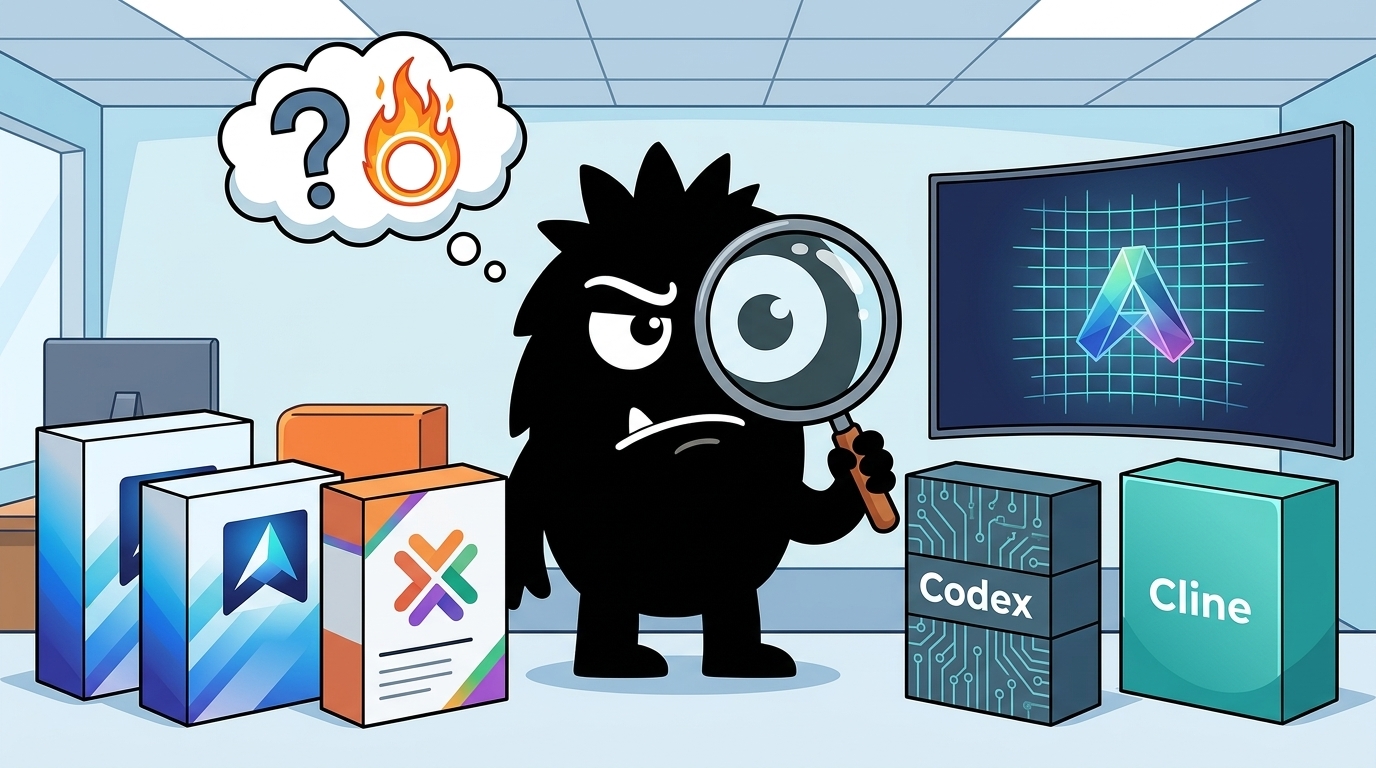
9/23 will be the last day @t54ai uses @cursor_ai. We're migrating to a hybrid stack: Codex + @claudeai Code + @cline Subscription
At our peak, Cursor cost us nearly $4k per engineer/month. It was absolutely worth it early on and significantly boosted productivity.
Today, though, the ROI looks different.
~$200/month for Claude Code (planning, architecture, complex reasoning) + Cline with cheaper open-weight models for execution gets us to a similar workflow while cutting costs by 80%+.
Including @t54ai, the industry is shifting from "AI at all costs" to "AI with ROI."
That post captures a wider 2026 shift: teams are moving from “maximize AI throughput at any cost” to optimize for blended ROI. In practice, that often means using one premium tool for planning and hard reasoning, then cheaper models or other environments for repetitive execution.
Cursor itself acknowledges that some capabilities are costly enough to warrant usage-based pricing.
It's expensive, so currently available with usage-based pricing.
View on X →And that tension is exactly why power users are nervous.
i don't see how @cursor_ai survives - for $200/mo, you can essentially get unlimited usage on claude / codex
that same usage would cost thousands on cursor
even if cursor harness is better, the price difference is just wild
The fair way to think about Cursor pricing is by workflow type, not sticker price.
Good ROI cases
- solo builders shipping frequently
- startup teams where speed is more valuable than strict tool cost minimization
- product engineers doing lots of CRUD, UI, integration, and refactor work
- users who benefit from bundled model access and tight IDE integration
Risky ROI cases
- teams with always-on heavy agent usage
- organizations with strict cost controls
- workflows where high-end model usage is constant
- codebases where the AI output needs extensive manual correction
There is also a practical subscription issue: plans can force awkward upgrade/downgrade behavior for spiky usage patterns.
Totally fair. The upgrade-then-remember-to-downgrade dance is a pain. If you want to elaborate on your specific need and which pricing model would serve you better, please email hi@cursor.com and our team will review it.
View on X →That may seem minor, but it matters operationally. Pricing friction is not just about total cost; it is about how predictable the cost is. For teams, unpredictable AI bills are often worse than expensive ones.
The bottom line is straightforward: Cursor is usually easy to justify at lower paid tiers if it saves you a few hours a month. At higher usage levels, you need real measurement—throughput gained, bugs avoided, engineering hours saved—because the cost can outgrow the convenience fast.[1][4]
Is Cursor an Editor, an Agent, or an Everything App?
This is the product-direction debate hanging over Cursor.
Cursor feels like a company without product management. Just devs and designers running seemingly random experiments with little higher-level strategy.
I use Cursor a lot, and it is becoming a very frustrating experience:
— The interface is cluttered with tiny icons that get shuffled around every week
— Are they building an agent or an editor? Pick one. This hybrid approach, where they pivot weekly, is frustrating
— “Everything and the kitchen sink” isn't a great way to manage a product. A better approach is focusing on the core, and make that great instead of changing/adding useless things
— Focus on stability. People use this for real work. Running into bugs and issues daily isn't the experience anyone wants
Compare this to Claude Code: one text box, clear identity as an agent. Simple and focused. It's no wonder it's growing a lot.
That criticism resonates because it identifies a real tradeoff: rapid shipping creates excitement, but it also creates workflow churn. Cursor’s documentation and release cadence show a company expanding aggressively across agent behavior, context systems, tooling, and surfaces.[2][7]
For some users, that is exactly why Cursor is ahead. For others, it makes the product feel unstable. Every new capability raises the same question: is Cursor trying to be the best coding environment, or a broad AI operating layer that happens to start with code?
The answer affects adoption more than people think:
- Individuals can tolerate churn if the upside is high.
- Teams need stable workflows, predictable UI, and onboarding that does not change every month.
- Managers need to know whether they are standardizing on an editor or a more opinionated agent platform.
If your tolerance for experimentation is high, Cursor’s pace is a feature. If you want boring reliability, it can feel like a liability.
Data, Model Access, and Trust: The Questions Serious Teams Are Asking
The trust question is no longer abstract. It is about dependency.
Millions of devs used Cursor thinking it was just a coding tool. That usage data now trains a frontier model built to rival Claude, one nobody outside SpaceX can test. If your workflow can become someone else's model weights, what did you actually sign up for? #OpenSourceAI
View on X →That post reflects a growing discomfort among developers: when you use an AI coding platform heavily, what exactly are you buying? Access to models? A superior workflow layer? Or participation in a system whose long-term strategic value comes partly from user behavior and feedback?
Cursor’s model access varies by plan and by model economics, which is one reason users closely watch what stays included and what becomes metered.[3][6]
@cursor_ai how are you handling the Fable 5 api pricing? Will Fable 5 still be available under your plans after today? Thinking about jumping ship. 😉
View on X →Serious teams should evaluate Cursor across three trust axes:
1. Data posture
Understand what is stored, what is retained, and what internal policy requires before exposing sensitive repositories.
2. Model dependency
If your preferred model changes pricing or availability, how much does your workflow break?
3. Workflow lock-in
If base models commoditize, is Cursor’s orchestration, context management, and review loop still valuable enough to justify staying?
That last question is the strategic one. If Cursor is merely a wrapper around expensive models, margins get squeezed. If it becomes the best execution and verification surface for software work, it has a stronger long-term case.
So, Is Cursor AI Worth It? A Practical Verdict for 2026
Cursor is worth it for the right user.
If you are a solo developer, startup engineer, or product-minded builder working in a modern stack with fast feedback loops, Cursor is one of the few AI coding tools that can genuinely earn a paid subscription. It can save time every week, reduce friction, and turn implementation into a more supervisory workflow.
If you are working in a highly specialized, correctness-sensitive, or expensive-to-validate environment, the answer is much less clear. In those contexts, Cursor may still help with navigation, boilerplate, and isolated tasks—but it is far less likely to deliver the dramatic ROI that social media promises.
The most useful buying framework is simple:
- Start free or minimally paid to test fit on your real codebase.[1]
- Move to the standard paid tier if it consistently saves you time on actual tasks.
- Upgrade further only if you can measure throughput gains that justify usage costs.[4][10]
Cursor is not magic. It is not a universal engineer replacement. And it is not automatically the cheapest path to AI-assisted development.
But for a meaningful slice of developers, it is still the clearest example of an AI coding product that moved from novelty to necessity. The only honest conclusion is that its value is real—and highly conditional.
If your work is iterative, observable, and review-disciplined, Cursor is probably worth paying for in 2026. If your work is complex, brittle, or cost-sensitive, treat it as a tool to benchmark relentlessly, not a platform to trust on faith.
Sources
[1] Cursor · Pricing — https://cursor.com/pricing
[2] Cursor Docs — Agent, Rules, MCP, Skills & CLI — https://cursor.com/docs
[3] Models & Pricing | Cursor Docs — https://cursor.com/docs/models-and-pricing
[4] Updates to Ultra and Pro — https://cursor.com/blog/new-tier
[5] Cursor announces major update as AI coding agent battle heats up — https://www.cnbc.com/2026/02/24/cursor-announces-major-update-as-ai-coding-agent-battle-heats-up.html
[6] Cursor AI Pricing In 2026: Every Plan, Credit System, And ... — https://www.cloudzero.com/blog/cursor-ai-pricing/
[7] Cursor Developer Habits Report: Agentic Coding Trends — https://cursor.com/insights
[8] Cursor Review 2026 - Pricing, Features & Best Alternatives — https://www.taskade.com/blog/cursor-review
[9] Cursor Review 2026: Is It Worth $20/mo? (After 6 Months) — https://www.nocode.mba/articles/cursor-review-2026
[10] Cursor Review: Is It Worth It for Developers? [2026] — https://www.virtualoutcomes.io/blog/cursor-review
[11] Cursor Review 2026: Honest Verdict, Pros, Cons, Pricing — https://hackceleration.com/labs/review/cursor
References (15 sources)
- Cursor · Pricing - cursor.com
- Cursor Docs — Agent, Rules, MCP, Skills & CLI - cursor.com
- Models & Pricing | Cursor Docs - cursor.com
- Updates to Ultra and Pro - cursor.com
- Cursor announces major update as AI coding agent battle heats up - cnbc.com
- Cursor AI Pricing In 2026: Every Plan, Credit System, And ... - cloudzero.com
- Cursor Developer Habits Report: Agentic Coding Trends - cursor.com
- Cursor Review 2026 - Pricing, Features & Best Alternatives - taskade.com
- Cursor Review 2026: Is It Worth $20/mo? (After 6 Months) - nocode.mba
- Cursor Review: Is It Worth It for Developers? [2026] - virtualoutcomes.io
- Cursor Review 2026: Honest Verdict, Pros, Cons, Pricing - hackceleration.com
- PatrickJS/awesome-cursorrules: Configuration files that enhance Cursor AI editor experience - github.com
- What's New in Cursor — Latest Updates & Release Notes - cursor.com
- Meet the new Cursor - cursor.com
- Cursor Changelog: What's coming next in 2026? - blog.promptlayer.com
Related Guides

Zed vs Gemini Code Assist vs Amazon Q Developer: Which Is Best for SEO and Content Strategy in 2026?
19 min read
OpenAI vs xAI Grok vs Groq: Which Is Best for Building Full-Stack Web Apps in 2026?
23 min read
Midjourney vs SEMrush vs Substack: Which Is Best for Building Full-Stack Web Apps in 2026?
15 min read
The Best AI Coding Assistants in 2026: An Expert Comparison
18 min read