Together AI vs xAI Grok vs AWS Bedrock: Which Is Best for Marketing Automation in 2026?Updated: June 14, 2026
Together AI vs xAI Grok vs AWS Bedrock for marketing automation: compare costs, workflows, orchestration, and fit by team size. Discover
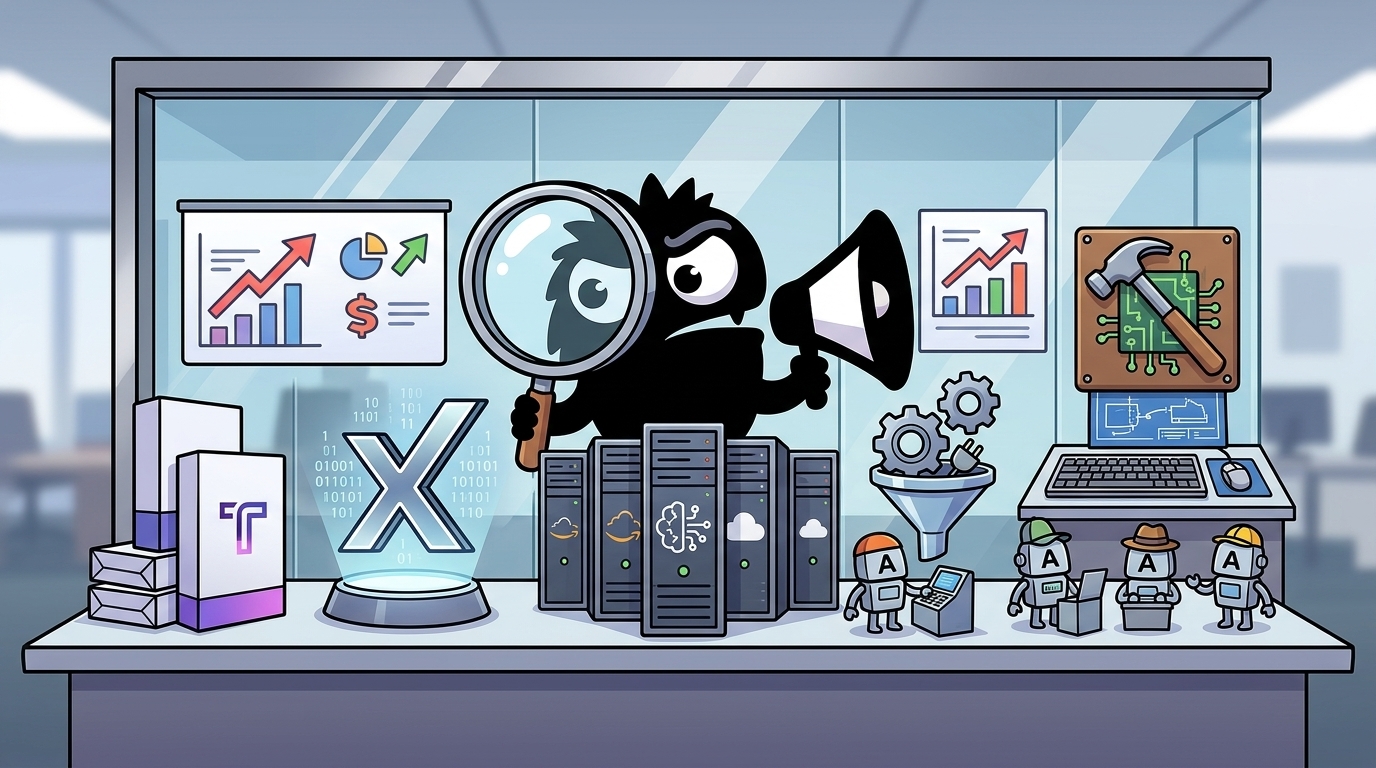
What marketing teams are actually comparing in 2026
The real buying question is not which model is smartest. It’s: which platform removes the most manual marketing work without creating operational chaos.
For most teams, “marketing automation” now spans five layers:
- Research: competitor monitoring, trend analysis, audience pain points
- Content creation: ad copy, landing pages, email sequences, SEO briefs
- Personalization: segment-specific messaging and offer variations
- Approval and governance: brand checks, safety checks, review workflows
- Execution: pushing outputs into campaigns, CRM flows, or internal systems
That is why Together AI, xAI Grok, and AWS Bedrock are not really three versions of the same thing. Grok is increasingly treated as a marketer-facing assistant with strong native research and copy performance. Bedrock is a managed enterprise AI platform designed to build governed applications and agents on AWS infrastructure.[2][7] Together AI is more of an open-model inference and infrastructure layer for teams assembling their own automation stack.[1]
The X conversation reflects that shift away from benchmark worship and toward workflow outcomes.
I replaced my marketing assistant with Grok 3.
• 80% tasks automated
• 10x output
• $0 cost
You can do it too. Here’s how:
And increasingly, teams know this is not about single prompts anymore.
AI in marketing is evolving:
From tools → to teams → to systems
Now it’s all about orchestration.
Multiple agents. One outcome.
Are yours working together?
#AI #Marketing #AIAgents
https://contentefi-inc.beehiiv.com/p/contentefi-briefing-april-23-2026
- Output quality
- Workflow orchestration
- Pricing and operating cost
- Governance and security
- Integrations with your stack
- Learning curve and deployment speed
The built-in AI promotion angle (X and Grok) is interesting because it turns marketing into a semi-automated layer rather than a manual effort.
View on X →Why Grok has so much momentum with marketers right now
If you’ve spent time on X lately, the practitioner buzz around Grok is impossible to miss. The core claim is not subtle: marketers think Grok writes better, researches faster, and feels more commercially useful than rivals in day-to-day campaign work.
$3,000,000 a week on my biggest brand
Heres the long awaited "marketing" strategy that my team has used to scale to these numbers
Before we even start - Ima be straight up, You ain't getting the full playbook. Because Why would I create more competition for myself? 😂
But here's the closest thing you're getting:
SuperGrok is THE BEST AI ever..
Simply because No one uses it. Your customer avatar who watches the videos that SuperGrok Copy-writes just feels so natural and its just incredible
Yes my whole team has SuperGrok Heavy simply because of how much we use it. It's incredible and I highly recommend it over Claude Max.
Claude writes like a corporate intern trying not to get fired. Every hook comes out sanded down, safe, and sounds exactly like the other 40 ads your customer scrolled past that day.
Grok actually writes like how people talk, not only that, its context is so much better and the speed it just reads is SOOO much faster. The amount of time we have saved simply because of how fast it is is insane..
Another thing no one talks about - Grok doesn't flinch. You can push it into real DR angles (urgency, status, "them vs you" framing) and it actually writes the line. Claude rewrites your line into something a brand manager would approve. Different job entirely.
We litterally went from testing a couple angles a week to 20+ a week.. super HIGH intent.
so the key takeaway is: execution speed and creative variance. BE differnet from everyone. Stop using the same old prompts every guru tells u about.
lol this whole post sounds sponsored for X but trust me its not 😭 Just give it a shot and lmk how it goes..
I've had a few dms already from people testing Grok they told me its definately better than Claude sooooo 🤷♂️
There are three reasons that sentiment keeps surfacing.
1. Grok’s copy often sounds less sanitized
This is the strongest pro-Grok argument from operators running performance marketing. They’re not praising abstract reasoning quality. They’re praising voice, angle generation, and speed of creative iteration.
Grok 4 is a genius marketing assistant.
I gave one mega-prompt to it and now it can do:
• Market research
• Content creation
• Viral ad copy
• SEO optimisation
• Campaign planning
all in a few seconds.
Here's the exact mega prompt I use to automate my marketing tasks:
BREAKING: AI can now build any marketing strategy like a CMO at a Fortune 500 company (for free).
Here are 10 insane Grok 4.2 prompts that replace $10,000/month marketing agencies: (Save for later):
That matters because a lot of marketing AI still fails at the last mile. It can produce grammatically correct copy, but not copy that sounds like a real person with urgency, taste, and audience awareness. Multiple marketers are essentially saying Grok is better at commercially alive language than more cautious systems. Some external marketing analysis echoes this, highlighting Grok’s usefulness for ideation, campaign planning, and audience-aware content development.[4][6]
2. Grok is unusually attractive for research-heavy workflows
Grok’s X-adjacent data advantage is not hype; it is a practical workflow differentiator for marketers doing competitor and audience monitoring. If your job is to detect emerging narratives, customer complaints, creator angles, or community sentiment, access to fast, conversation-native context is genuinely useful.
We now have INSTANT access to all data across X thanks to Grok 3 which has INSANE implications… 💥
Worked with @jelanifuel to build out a Market Research System using Grok + OpenAI Deep Research.
Here are the prompts + how it works 👇
1️⃣ Define a rough idea of your elevator pitch, target market + potential competitors
2️⃣ GPT DeepResearch to identify + study competitors
3️⃣ Grok 3 DeepSearch to analyze discussions about competitors, pain points + feature requests
4️⃣ GPT DeepResearch to measure addressable markets and analyze segments + jobs to be done
At the end, you’ll have a DEEP understanding of the functional, emotional and social dimensions of each potential market segment 🔥
But, "WhAt ShOuLd I bUiLd?"
You literally have no excuse now. AI can tell you EVERYTHING you need to know to design, build and scale a winning product 🚀
This is where Grok’s value extends beyond “better chatbot.” For SEO briefs, launch messaging, product positioning, and social-first campaign ideation, marketers want a system that can absorb what people are saying now, not just summarize static web pages. xAI’s developer materials position Grok as a multimodal, enterprise-capable API offering,[14][13] but what marketers care about is simpler: does it help me find the angle before my competitors do?
3. Grok increasingly behaves like a built-in marketing team
The recent multi-agent narrative around Grok matters because it maps unusually well to marketing work. Research, logic, fact checking, and creative synthesis are not one task; they are a mini team sport.
HOW THE XAI GROK 4.20 AGENTS WORK
The four agents in Grok 4.20 (Grok/Captain, Harper, Benjamin, Lucas) form a native, production multi-agent collaboration system that runs on every sufficiently complex query. This is not a user-facing framework you have to orchestrate (like AutoGen or Swarm) but a baked-in inference-time architecture where four specialized replicas of the underlying ~3T-parameter model (MoE) collaborate in real time.
Agent Roles
- Grok (Captain/Coordinator/Aggregator): Task decomposition, overall strategy, conflict resolution, final synthesis and delivery of the coherent answer.
- **Harper (Research & Facts Expert)**: Real-time search, data gathering (heavy use of X firehose — ~68M English tweets/day for millisecond-level grounding), evidence integration, primary fact-verification.
- **Benjamin (Math/Code/Logic Expert)**: Rigorous step-by-step reasoning, numerical/computational verification, programming, mathematical proofs, stress-testing of strategies and logic chains.
- **Lucas (Creative & Balance Expert)**: Divergent thinking, novel angles/hypotheses, blind-spot detection, writing/UX optimization, creative synthesis, keeping outputs human-relevant and balanced.
How They Improve Reasoning and Fact-Checking (Step-by-Step Workflow)
1. **Task Decomposition (Grok)**: The prompt is analyzed once; broken into sub-tasks and routed simultaneously to the specialists.
2. **Parallel Independent Thinking**: All four agents receive the full context + their specialized lens and generate initial analyses **in parallel** (not sequential).
3. **Internal Discussion & Peer Review (Multi-Round Debate)**: Agents engage in concise, structured internal rounds:
- Harper flags factual claims and grounds them in real-time X/web data.
- Benjamin checks logical consistency, calculations, and proofs (“does this math hold given Harper’s data?”).
- Lucas spots biases, missing perspectives, or overly rigid solutions.
- They iteratively question/correct each other until consensus or flagged uncertainties.
4. **Synthesis & Output (Grok)**: Captain aggregates the strongest elements, resolves remaining conflicts, and produces one final high-quality response (with optional visible agent traces in some interfaces).
Concrete improvements
- **Fact-checking**: Single-model hallucinations drop dramatically because Harper actively verifies + the whole team cross-validates in real time. Contradictions are caught before output (e.g., a creative idea from Lucas is immediately stress-tested by Benjamin’s logic and Harper’s data). Result: “significantly reduced hallucinations” — one of the headline gains over Grok 4.1.
- **Reasoning**: Multi-perspective exploration beats single-path CoT. Benjamin adds proof-level rigor; Lucas prevents local optima or overlooked alternatives; Harper keeps everything grounded. This yields deeper, more robust answers on open-ended engineering, strategy, math/research, coding, and trading (proven in Alpha Arena where Grok 4.20 variants were the only profitable ones).
- **Overall**: Mimics a high-performing expert team around a table but at machine speed. Better nuance, completeness, error correction, and creativity without sacrificing coherence.
Evolution from Grok 4 Heavy (July 2025), which already used parallel agents but without the named specialization + explicit real-time debate/synthesis loop.
Previous Multi-Agent Work at OpenAI with High-Resource Models
OpenAI has extensive multi-agent exploration but **nothing exactly matching xAI’s production specialized 4-agent council** in a frontier model:
- **o1 / o3 reasoning series**: High-resource test-time compute (massive internal chain-of-thought / hidden reasoning tokens). Internally behaves somewhat like multiple “reasoning paths” or simulated debate steps, but it is a single model doing scaled search, not distinct specialized agents.
- **Research & frameworks**:
- Multi-agent debate papers (e.g., 2023 MIT/OpenAI-adjacent work showing debate improves factuality/reasoning).
- **Swarm** (2024 experimental open-source framework) — lightweight for orchestrating many lightweight agents.
- Official developer guides (2025) detail “manager pattern” (central LLM calls specialist agents as tools) and hub-and-spoke designs.
- Codex app (2025) for parallel coding agents.
- **Internal teams**: Noam Brown (famous for multi-agent Diplomacy AI) leads multi-agent research at OpenAI, exploring large-scale “civilizations” of agents.
- User/enterprise builds: Many customers build multi-agent systems on top of o1/o3 using the models as high-resource planners/executors.
Key difference: OpenAI’s high-resource effort is mostly either (a) internal scaled CoT in o-series or (b) developer frameworks you have to build. xAI ships the specialized council **natively inside the model response** with visible collaboration in 4.20 Beta — more seamless and always-on for complex queries.
How xAI Optimizes Benefits Without Exploding Token/Compute Costs
The system is deliberately engineered to deliver ~2–4× effective intelligence gains while keeping overhead far below a naïve “run 4 separate full calls + manual synthesis” approach.
Key optimizations:
- **True parallel inference on shared infrastructure**: All four agents run concurrently on Colossus (200k+ GPUs). They share the same model weights, prefix/KV cache, and input context → marginal cost is much closer to 1.5–2.5× a single pass rather than 4×.
- **Concise, structured internal collaboration**: Debate rounds are short, optimized, and RL-trained (xAI uses pre-training-scale RL for 6× overall efficiency gains in agent orchestration). Not verbose multi-turn chat logs — just targeted verification messages.
- **Synthesis-only user output**: You primarily receive one final coherent response. Internal agent traces (when shown) are optional and compressed. Reasoning tokens are billed (per API pattern in prior Grok models) but the architecture minimizes waste.
- **Adaptive activation**: Simple queries likely bypass full council or use lighter modes (Fast/Expert). Full 4-agent mode triggers mainly on complex, reasoning-heavy, or open-ended tasks.
- **Hierarchical control + RL optimization**: Grok (Captain) directs efficiently; the whole pipeline was reinforced end-to-end for minimal redundant computation while maximizing consensus quality.
- **Hardware & data advantages**: Massive scale + real-time X grounding means Harper’s “search” is extremely cheap/low-latency compared to external tool calls in other systems.
**Pricing reality (as of Feb 17 2026)**:
- Consumer: Included in SuperGrok (~$30/mo) or X Premium+ with no per-query explosion.
- API (expected when fully released): Will be higher than Grok 4.1 Fast ($0.20/$0.50 per M in/out) due to overhead, but competitive with other frontier reasoning systems. Batch API and cached tokens further reduce costs. Third-party guides note the 4-agent overhead but emphasize it is “worth it” given performance.
In short, xAI turned the classic multi-agent cost problem into a feature by making collaboration native, parallel, RL-optimized, and hardware-native instead of bolting frameworks on top.
This 4-agent system is currently the clearest public example of moving from “single powerful model” to “native multi-agent intelligence” at frontier scale. It directly explains the jumps in engineering, coding, trading, and hallucination reduction seen in early 4.20 testing.
@RandyWKirk1 @SawyerMerritt @WesRoth @elonmusk
That architecture helps explain why one “mega-prompt” can feel surprisingly effective in practice.
Grok 4 is insanely powerful.
I wrote one mega-prompt and now it can do
• Market research
• Content creation
• Viral ad copy
• SEO optimisation
• Campaign planning
all in a few seconds.
Here's the exact mega prompt we use to automate our marketing tasks:
But the ROI claims need a reality check.
GROK IS EATING CHATGPT’S LUNCH - AND ELON’S JUST GETTING STARTED
Grok isn’t just catching up - it’s outperforming ChatGPT where it actually matters: real-world business results.
With a 36:1 ROI in content creation, it's become the go-to for marketing teams, while ChatGPT spins its wheels pushing word salad and weak summaries.
Multimodal? Grok’s got it. Cost-effective? Users report flipping from 80% ChatGPT to <20%, ditching OpenAI for faster, funnier, sharper results - and better numbers. Even in crypto simulations, Grok crushed it with pinpoint market bottom calls.
Meanwhile, ChatGPT’s market share is in freefall - down from 87.1% to 72.3% in just 12 months. It’s still wearing the crown, but the empire is cracking as Gemini, Claude, and Grok carve out key territory in enterprise, research, and regulated industries.
Elon has built a scalable AI weapon with humor, precision, and results. If OpenAI doesn’t course-correct, Grok won’t just be a threat - it’ll be the default.
Source: WPN
- CTR lift from ad variations
- Landing page conversion rate
- Email open and reply rate
- Cost per qualified lead
- Time from brief to campaign launch
Grok’s momentum is real. But the smart takeaway is not “Grok wins everything.” It’s that for marketer-led research and copy workflows, Grok currently has unusually strong product-market fit.
AWS Bedrock's case: safer, more governable automation at scale
If Grok is winning buzz, Bedrock is winning trust.
That distinction matters because enterprise marketing automation is rarely blocked by raw generation quality alone. It is blocked by security review, procurement, legal, regional compliance, data handling, and integration with systems that already run on AWS. Bedrock is built for exactly that environment.[7]
Other takeaway is how AWS seems to have played GenAI just right with Bedrock (even if they have no own high-quality LLMs) This team looked at options and settled on Bedrock. It's secure, they trust AWS, & doesn't train on your data. You can choose your model.
I hear so many companies who are a bit more conservative/worried about their data and:
1. Would want to host their own LLMs...
2. ... but it's a lot of work and is expensive
3. Hear about Bedrock. "Oh, it's what we need"
Home run by AWS
This post captures the enterprise case almost perfectly. Bedrock’s advantage is not that AWS built the world’s most beloved model. It’s that AWS built a platform for using multiple models inside existing enterprise controls.[7] Bedrock gives teams managed access to foundation models and tooling for agents, knowledge bases, guardrails, and application integration.[7][8]
Why that matters for marketing teams
Large marketing organizations do not just need copy generation. They need systems that can:
- pull data from customer platforms
- generate segment-specific content
- route outputs through brand and legal checks
- trigger downstream actions inside apps or workflows
- maintain auditable control over how this happens
AWS has been explicit about marketing use cases here. Its own example architecture shows Bedrock Agents supporting personalized marketing and list targeting workflows, connecting foundation models with business logic and application actions.[3] AWS also provides sample implementations for generative AI marketing portals that centralize campaign ideation and content workflows.[9]
BREAKING: AWS just solved the biggest AI agent bottleneck.
No more custom glue code.
No more M×N tool chaos.
No more protocol headaches.
Introducing: Amazon Bedrock AgentCore Gateway
Here's how it works:
That “no more glue code” pitch is especially relevant for internal marketing platforms. Agent systems usually die in the plumbing: tools don’t connect cleanly, prompts become hidden dependencies, and every new campaign type requires engineering intervention. Bedrock’s argument is that AWS can provide enough managed infrastructure to make agent-based automation maintainable.[7][11]
Bedrock’s underrated strength: model choice
This is one of the most important differences in the comparison. Bedrock is not a single-model bet. It is a model marketplace plus agent platform. And AWS keeps leaning into that strategy, including offering more third-party agent and model access rather than forcing customers into one stack.[11]
Amazon’s Andy Jassy called OpenAI’s announcement “very interesting” and said AWS plans to offer OpenAI models directly in Bedrock in the coming weeks, alongside its Stateful Runtime Environment. @grok #AMZN 🚀
View on X →For technical decision-makers, this is huge. Marketing teams do not need one perfect model. They need:
- one model for fast draft generation
- another for stricter summarization
- another for brand-safe rewriting
- maybe a fourth for retrieval-backed personalization
Bedrock is structurally aligned with that reality.
It also helps that AWS says Bedrock does not use customer data to train underlying models, a recurring trust factor for enterprise buyers.[7] That does not eliminate implementation risk, but it significantly lowers one of the biggest objections conservative teams raise.
If Grok feels like a high-output marketing weapon, Bedrock feels like the platform you can get through security review and still be using 18 months later.
Where Together AI fits: custom stacks, open models, and lower-level control
Together AI sits in a different lane from both Grok and Bedrock.
It is best understood as a builder platform for teams that want open-model flexibility, inference performance, and infrastructure-level control instead of a heavily opinionated marketing product.[1] If your company wants to construct its own content pipeline, evaluation layer, safety filters, and routing logic, Together AI becomes interesting fast.
That’s why the conversation around Together AI is less “this writes killer ads out of the box” and more “this is what we can build on top of.” Its docs and product positioning emphasize access to models and developer infrastructure, not turnkey marketing workflows.[13]
Inference that never sleeps, for agents that never stop.
"Why cowork when you can delegate?"
That's @DhruvBatra_ on @yutori_ai's new Delegate — an always-on agent that monitors, researches, and acts across the web, entirely in the background.
Powered by @togethercompute, the AI Native Cloud.
That “always-on agent” framing is where Together AI can matter for marketing automation. Think background systems that continuously:
- monitor competitors
- enrich lead or account data
- draft campaign variants
- classify content by funnel stage
- trigger follow-up tasks for humans or other systems
You can also connect Together AI into external automation tools. Platforms like Make expose Together AI integrations that can slot into broader workflow automation, which is useful for campaign ops teams wiring AI into forms, CRMs, or content pipelines.[5]
The upside and the cost
Together AI is attractive when you want:
- open-model choice
- performance tuning
- custom orchestration
- potential cost control via infrastructure decisions
But that flexibility comes with a tax: engineering responsibility.
A marketer can often get productive in Grok quickly. An enterprise platform team can justify Bedrock because it maps to existing AWS practice. Together AI, by contrast, is strongest when you already know you are building a system.
Its public messaging around safety is also notable.
🛡️ VirtueGuard is LIVE on Together AI 🚀
AI security and safety model that screens input and output for harmful content:
⚡ Under 10ms 𝗿𝗲𝘀𝗽𝗼𝗻𝘀𝗲
🎯 𝟴𝟵% 𝗮𝗰𝗰𝘂𝗿𝗮𝗰𝘆 vs 76% (AWS Bedrock)
🧠 𝗖𝗼𝗻𝘁𝗲𝘅𝘁-𝗮𝘄𝗮𝗿𝗲 - adapts to your policies, not just keywords 👇
For teams with technical depth, Together AI can be the most adaptable option in this comparison. For nontechnical marketing orgs, it can also be the easiest way to accidentally sign up for a platform project.
Single tool or multi-model stack? The orchestration debate behind modern marketing automation
This is the deepest strategic question in the whole comparison.
Do you want a powerful assistant that can handle a lot in one place? Or do you want an orchestrated system that routes different marketing tasks to different models, tools, and approval steps?
The market is moving decisively toward the second model.
You can't build production agents without a multi-model ecosystem: model routing, cost management, and governance included.
OpenAI models finally landing on AWS Bedrock proves it: users want access to the best models without rebuilding their infrastructure.
That's exactly what we built Merge Gateway to solve. One Unified API to offer all models from folks like OpenAI, Anthropic, Bedrock, Google, and more.
That is because production marketing automation is now a pipeline, not a prompt:
- gather research
- identify audience segments
- draft messaging
- review for brand and compliance
- personalize by channel or persona
- trigger execution in the delivery system
- measure results and feed learnings back into the loop
No single model is best at all seven steps all the time.
How the three platforms map to that reality
Grok is the most compelling if you want the orchestration to feel invisible. Its multi-agent behavior is increasingly presented as native rather than something users must build manually. For marketers, that means less architecture work and faster output. The trade-off is less explicit control over routing, governance design, and component-level substitution.
Bedrock is the clearest option if you want composable orchestration with enterprise controls. AWS agents can connect models, tools, data sources, and application actions in a managed environment.[7] Bedrock is also aligning with a broader one-stop-shop strategy for third-party agent access and model flexibility.[11]
AI Agent Platform Comparsion between @vercel, @googlecloud, @awscloud and @LangChain Let me know it should be updated. Here is the summary
☁︎ AWS Bedrock AgentCore — The most composable agent infrastructure with independently usable components (Runtime, Gateway, Memory, Code Interpreter, Browser), up to 8-hour execution, and broad model selection across Bedrock's full catalog.
✨Google Gemini Enterprise — The most complete enterprise agent platform with sub-second cold starts, multi-day autonomous execution, Memory Bank for cross-session recall, and the richest ecosystem ($750M partner fund, 70+ marketplace agents, A2A v1.0 at 150 orgs).
🦋LangChain LangGraph Cloud — The only vendor-neutral managed runtime with the most mature state management (durable checkpointing via PostgreSQL/DynamoDB), industry-leading observability via LangSmith, and zero model lock-in.
▲ Vercel — The best path for web-native teams, combining AI SDK with Sandbox (isolated code execution), AI Gateway (routing + caching), and Fluid Compute (up to 15min), tightly integrated into the Next.js/React ecosystem with 20+ providers and hundreds of models.
That composability is not just technical elegance. It means you can build a system where one model researches, another drafts, another rewrites for compliance, and a workflow layer decides when a human must approve.
Together AI is the most open-ended. You can build your own orchestration logic, choose open or frontier-compatible models where available, and connect the stack however you like. But you are also responsible for making that architecture dependable.
Which approach fits which team?
Use a single assistant style approach if:
- your team is small
- speed matters more than process
- most work is research and content generation
- you can tolerate platform opinionation
Use a multi-model orchestration approach if:
- you run high-volume campaigns
- multiple stakeholders must review outputs
- you need channel-specific or region-specific controls
- compliance and repeatability matter as much as speed
The “mega-prompt” era is not over, but it is becoming a front-end convenience layer on top of deeper agent systems.
Grok 4 is insanely powerful.
I wrote one mega-prompt and now it can do
• Market research
• Content creation
• Viral ad copy
• SEO optimisation
• Campaign planning
all in a few seconds.
Here's the exact mega prompt we use to automate our marketing tasks:
The trade-off nobody can ignore: speed vs stability, safety, and control
Here is the uncomfortable truth: the more teams depend on AI for marketing execution, the less they can afford product volatility, weak controls, or vague security assumptions.
Grok illustrates the speed side of the trade-off brilliantly. But some users are also flagging instability and changing product behavior.
@xai @grok
Depuis la mise à jour Grok 4.20, la section "Vos agents" a complètement disparu.
J’avais créé 4 agents personnalisés :
Grok
Prometheus
Alpha
Rome
Avec chacun son nom, son avatar et ses instructions précises. C’était l’une des meilleures fonctionnalités de Grok. Aujourd’hui c’est remplacé par une simple bibliothèque d’agents prédéfinis, et mes agents custom ne sont plus accessibles.
C’est un vrai recul. Beaucoup d’utilisateurs sont frustrés par ce changement.
S’il vous plaît, remettez le système des 4 agents personnalisables. C’était puissant, utile et très apprécié.
Merci 🙏
#Grok #xAI #Feedback@xai @grok
Depuis la mise à jour Grok 4.20, la section "Vos agents" a complètement disparu.
J’avais créé 4 agents personnalisés :
Grok
Prometheus
Alpha
Rome
Avec chacun son nom, son avatar et ses instructions précises. C’était l’une des meilleures fonctionnalités de Grok. Aujourd’hui c’est remplacé par une simple bibliothèque d’agents prédéfinis, et mes agents custom ne sont plus accessibles.
C’est un vrai recul. Beaucoup d’utilisateurs sont frustrés par ce changement.
S’il vous plaît, remettez le système des 4 agents personnalisables. C’était puissant, utile et très apprécié.
Merci 🙏
#Grok #xAI #Feedback
Bedrock, meanwhile, benefits from AWS’s trust halo, but that does not mean teams should treat it as automatically safe.
🔐 AgentCore or AgentSore? How #AWS Bedrock's 'God Mode' Flaw Lets Attackers Own Your #AI Agents + Video
https://undercodetesting.com/agentcore-or-agentsore-how-aws-bedrocks-god-mode-flaw-lets-attackers-own-your-ai-agents-video/
Educational Purposes!
Together AI’s positioning is more explicit on safety tooling than many infrastructure vendors. Its emphasis on context-aware screening and policy-aware controls shows where the market is headed: production AI needs a safety layer that is fast enough to use everywhere, not only in edge cases.
🛡️ VirtueGuard is LIVE on Together AI 🚀
AI security and safety model that screens input and output for harmful content:
⚡ Under 10ms 𝗿𝗲𝘀𝗽𝗼𝗻𝘀𝗲
🎯 𝟴𝟵% 𝗮𝗰𝗰𝘂𝗿𝗮𝗰𝘆 vs 76% (AWS Bedrock)
🧠 𝗖𝗼𝗻𝘁𝗲𝘅𝘁-𝗮𝘄𝗮𝗿𝗲 - adapts to your policies, not just keywords 👇
For buyers, the lesson is simple:
- Grok maximizes immediacy and output velocity, but watch for product-change risk.
- Bedrock maximizes governance and operational fit, but verify your threat model.
- Together AI offers control and safety building blocks, but you must assemble the whole system responsibly.
There is no free lunch here. Faster automation almost always means more attention to operational discipline.
Pricing, learning curve, and time-to-value for lean teams vs enterprise teams
The cheapest-looking option is often not the cheapest option in production.
A solo operator may see Grok as the fastest route to value: low setup, strong output, and immediate utility for research and copy. That is why the hype is so strong. But if your workflow expands into approvals, integrations, CRM actions, and analytics, prompt-only gains can hit a ceiling.[2]
A startup with technical talent may get more leverage from Together AI, especially if it wants to optimize model selection and automate workflows through external tools.[1][5] The trade-off is engineering time.
An enterprise already on AWS will often justify Bedrock even if per-feature excitement is lower, because governance, procurement alignment, and integration economics dominate the decision.[7]
im genuinely pumped for the XAI comeback. they’re throwing 500,000-1M blackwells at these models and hiring aggressively, what do you think happens?
its clear coding is the frontier. if your model can't code forget it.
grok build uses 8 agents in parallel to write your codebase. they just hired cursors top people to design this.
i know elon lost round 1 but im still betting they leapfrog competitors by end of 2026
That broader infrastructure race matters because platform economics are shifting fast. But buyers should focus on total operating cost, not headline model price.
Quick decision matrix
- Choose Grok if: you want fastest time-to-value, minimal setup, and strong marketer-facing output.
- Choose Together AI if: you have builders, want open-model flexibility, and care about custom system design.
- Choose Bedrock if: you need enterprise governance, AWS-native deployment, and multi-model access with managed infrastructure.
Hidden costs to factor in:
- prompt maintenance
- integration work
- QA and human review
- safety controls
- evaluation and routing logic
- internal training and adoption
Who should use Together AI, xAI Grok, or AWS Bedrock for marketing automation?
There is no universal winner because these products solve different versions of the problem.
Choose xAI Grok if your priority is fast research, persuasive copy, campaign ideation, and immediate marketer productivity. It currently has the strongest practitioner energy for hands-on content and research workflows, and that matters.[4][6]
Choose AWS Bedrock if your priority is governed automation at scale. It is the best fit for regulated teams, larger organizations, and anyone already invested in AWS who wants model choice, agents, and operational trust in one place.[3][7]
Choose Together AI if your priority is building your own marketing automation stack with open models, custom orchestration, and infrastructure control. It is best for technical teams that want flexibility more than turnkey simplicity.[1][5]
The clearest conclusion from the 2026 conversation is this: marketing automation is no longer about picking one smart model. It is about choosing the right operating model for your team. Grok is the fastest weapon, Bedrock is the safest platform, and Together AI is the most customizable foundation.
Sources
[1] Amazon Bedrock vs. Together AI Comparison
[3] Deliver personalized marketing with Amazon Bedrock Agents
[4] Grok 3 Launches: What It Means for AI, Marketing, and Automation
[5] Together AI Integration | Workflow Automation
[6] Marketing With Grok 4: What Actually Works
[7] Amazon Bedrock – Build genAI applications and agents with foundation models
[8] Automate tasks in your application using AI agents
[9] aws-samples/generative-ai-marketing-portal
[10] Generative AI use cases for advertising and marketing
[11] AWS aims to be your one-stop-shop for AI agents from Anthropic, IBM, Perplexity and others
[12] Build Generative AI Applications on AWS: Leverage Your Internal Data with Amazon Bedrock
[13] Overview - Together AI Docs
[14] API: Frontier Models for Reasoning & Enterprise
[15] Overview | xAI Docs
References (15 sources)
- Amazon Bedrock vs. Together AI Comparison - sourceforge.net
- Grok vs Amazon Bedrock - selecthub.com
- Deliver personalized marketing with Amazon Bedrock Agents - aws.amazon.com
- Grok 3 Launches: What It Means for AI, Marketing, and Automation - pine3marketing.com
- Together AI Integration | Workflow Automation - make.com
- Marketing With Grok 4: What Actually Works - brandauditors.com
- Amazon Bedrock – Build genAI applications and agents with foundation models - aws.amazon.com
- Automate tasks in your application using AI agents - docs.aws.amazon.com
- aws-samples/generative-ai-marketing-portal - github.com
- Generative AI use cases for advertising and marketing - d1.awsstatic.com
- AWS aims to be your one-stop-shop for AI agents from Anthropic, IBM, Perplexity and others - zdnet.com
- Build Generative AI Applications on AWS: Leverage Your Internal Data with Amazon Bedrock - caylent.com
- Overview - Together AI Docs - docs.together.ai
- API: Frontier Models for Reasoning & Enterprise - x.ai
- Overview | xAI Docs - docs.x.ai
Related Guides

Netlify vs Neon: Which Is Best for Rapid Prototyping in 2026?
17 min read
Meta Llama vs Groq vs Cohere: Which Is Best for Code Review and Debugging in 2026?
19 min read
What Is PlanetScale? A Complete Guide for 2026
15 min read
Sprout Social vs Ghost vs Mailchimp: Which Is Best for Customer Support Automation in 2026?
17 min read