Flowise vs n8n vs Vertex AI Agents: Which Is Best for Enterprise Software Teams in 2026?
Flowise vs n8n vs Vertex AI Agents for enterprise teams: compare deployment, governance, pricing, and fit by use case. Discover
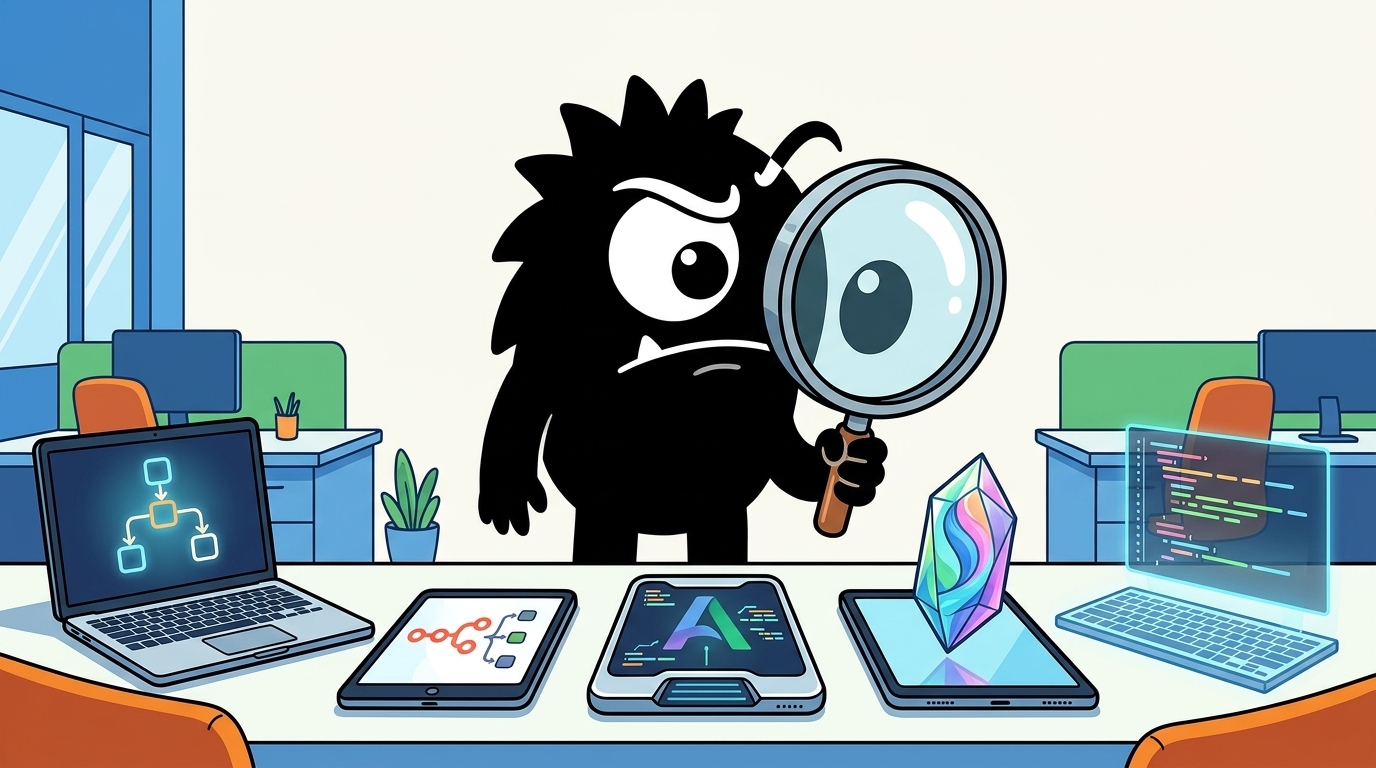
Why this comparison matters now: enterprise teams are choosing between speed, control, and cloud fit
The loudest conversation around agent tooling in 2026 is about how fast you can build. That’s real. Visual builders have dramatically lowered the barrier to shipping a working chatbot, RAG assistant, or tool-using agent.
The biggest AI opportunity right now? 🤖
Building AI Agents without writing a single line of code.
With tools like n8n, Make, Flowise, and Zapier, anyone can create agents that research, automate, schedule, and execute tasks 24/7 ⚡
The future belongs to builders 🚀
Repost 🔁
But enterprise software teams are not actually buying “agent demos.” They are buying a delivery model: how quickly a team can go from prototype to production without losing control of security, observability, governance, and integration.
That is why this comparison matters. Flowise, n8n, and Vertex AI Agents are often mentioned in the same breath, yet they solve different layers of the enterprise problem. Flowise is optimized for AI-first visual construction of LLM applications and agents.[3] n8n is a workflow automation platform that now includes AI agents as part of a broader orchestration story.[7][8] Vertex AI Agents—now under Google’s Gemini Enterprise Agent Platform positioning—is a managed enterprise agent platform built around GCP-native services, Gemini access, and cloud governance.[12]
The most useful way to compare them is not “which one builds agents best?” It is:
- Do you need fast AI-native prototyping?
- Do you need cross-system workflow orchestration with AI in the loop?
- Or do you need managed enterprise agent infrastructure inside Google Cloud?
That distinction gets missed in hype-heavy conversations. And when it does, teams end up selecting a tool for its demo experience, then discovering six months later that the real bottleneck was orchestration.
Leadership sees an org ready for AI at scale. The people running it see disconnected tools and blind spots.
Add AI agents to that setup and things don't get faster, they get riskier.
Scale comes from orchestration, not more automation.
Read our article: https://www.flowable.com/blog/business/enterprise-workflow-automation?utm_source=Twitter&utm_medium=Organic&utm_campaign=SoMe+-+X+-+Blog+Enterprise+Workflow+Automation
#WorkflowAutomation #EnterpriseAI #ProcessOrchestration
What each platform is actually optimized for
A lot of confusion disappears once you stop treating these three products as direct substitutes.
Flowise: AI-first visual building
Flowise is best understood as a visual builder for LLM apps and AI agents. Its core abstractions revolve around chatflows, agentflows, RAG pipelines, memory, tool calling, and model/provider flexibility.[2][3] If your team wants to assemble an internal assistant over proprietary documents, add retrieval, connect a few APIs, and expose a conversational interface, Flowise is very fast.
That is why so many practitioners describe it as “AI-native” rather than just “low-code.”
¡Claro! El del video es Flowise (49k stars): builder visual open source para agentes AI completos con RAG, memoria persistente y multi-agentes.
Vs n8n (157k stars):
- Similitudes: ambos self-hosted, open source, nodos drag-and-drop.
- n8n: rey de automatizaciones generales + integraciones (Zapier-like), AI como extra.
- Flowise: puro AI/LLM, ideal para agents inteligentes y flujos complejos.
Flowise gana en agents avanzados; n8n en workflows mixtos de negocio. ¿Qué usás vos?
The upside is obvious:
- quick setup for RAG and agent patterns
- broad model support
- visual experimentation for prompt and tool chains
- open-source deployment flexibility[1][3]
The tradeoff is equally clear: Flowise is strongest when the center of gravity is the AI workflow itself, not broad enterprise process orchestration.
n8n: workflow automation first, AI second—but that is a strength
n8n started life as a workflow automation platform, not a pure agent builder. That matters. Its real advantage is not that it can do AI; it is that it can connect AI to the rest of the business stack: triggers, SaaS tools, APIs, approvals, ETL-like data movement, notifications, and operational actions.[6][7]
That framing from X is exactly right:
Everyone is building AI agents.
Very few understand the agentic frameworks that actually power them.
In 2025, two frameworks dominate agent development —
not as competitors, but as complementary layers:
n8n — Visual Workflow Automation
What it does
• Visually connects AI agents with business tools and APIs
• Flow: Trigger → AI Agent → Tools → Action
• Removes integration complexity and speeds up deployment
Think of it as:
The orchestrator that plugs AI into your entire tech stack
For enterprise teams, this is often more important than flashy agent UX. Many production use cases are not “build a genius autonomous agent.” They are “take an inbound event, enrich it with AI, route it, write back to multiple systems, wait for human review, retry if an API fails, and create an audit trail.” That is n8n territory.
So while people still compare Flowise and n8n feature-by-feature, the more useful lens is:
- Flowise for AI application construction
- n8n for business and systems orchestration with AI embedded
Vertex AI Agents: enterprise agents for GCP shops
Vertex AI Agents, now packaged within Google’s Gemini Enterprise Agent Platform, is not trying to be a self-hosted open-source visual builder. It is trying to be the enterprise agent layer for organizations already standardized on Google Cloud.[12][15]
Its value proposition is straightforward:
- access to Gemini models and Model Garden
- integration with BigQuery, Cloud Run, Cloud Functions, and other GCP services
- managed enterprise security and compliance in the GCP framework
- declarative agent building via Agent Builder[12][13]
2/10
What Vertex AI Agents is:
→ Google Cloud's agent platform within Vertex AI
→ Deep integration w/ GCP services (BigQuery, Cloud Functions, Cloud Run)
→ Access to Gemini family + Model Garden
→ Enterprise security + compliance in GCP framework
→ Agent Builder for declarative design
→ Usage-based pricing via GCP billing
For GCP customers building agents in their cloud.
This means Vertex AI Agents is rarely the best answer for teams seeking portability or minimal infrastructure lock-in. But for a company already invested in GCP, that “lock-in” is often just architectural alignment. If your data plane, IAM model, networking, and operations already live in Google Cloud, Vertex is not a separate tool decision. It is an extension of your existing platform.
Prototype speed vs production complexity: where visual builders shine and where they start to hurt
Visual builders are not hype. They genuinely compress the time from idea to working software. Flowise in particular makes it possible to stand up RAG, memory, tool-calling, and document-grounded chat experiences with very little code.[2] That is why it gets evangelized so hard.
You don't need to write a single line of code to build a full AI agent with RAG, memory, and tool calling in 2026.
I know that sounds like a lie. But It's not.
Flowise is an open source drag and drop builder for LLM apps and it's the most slept-on AI tool I've seen this year.
What you can build without touching a single line of code:
→ AI chatbots trained on your own documents
→ RAG pipelines connected to any vector database
→ Agents with persistent memory across sessions
→ Multi-agent workflows that chain tools together
→ Full LLM apps connected to your APIs and databases
Supports literally everything - Claude, GPT, Gemini, DeepSeek, Mistral, Llama, and every local model worth running through Ollama.
Self-hosted. Your data stays on your server.
No vendor lock-in. No monthly SaaS bill.
The no-code AI agent builder the big labs don't want you to know about because it makes their expensive APIs feel optional.
49K+ stars and most people in this space still haven't heard of it.
Now you have.
100% Open Source.
(Link in the comments)
For early-stage enterprise work—internal copilots, support assistants, search over documentation, sandbox agent experiments—that speed is a feature, not a gimmick.
n8n can also move fast, especially when your “agent” is really one part of a larger operational workflow. If the flow begins with a webhook, touches Slack, Salesforce, Google Sheets, Jira, an LLM, and a ticketing system, n8n’s visual approach is often more practical than assembling custom glue code from scratch.[6][7]
But the ceiling shows up when teams confuse easy assembly with durable system design.
📌 에이전트 프레임워크 12개 싹 걸러봤다, 근데 진짜 승부는 프레임워크가 아니었다
- 노코드형 : n8n, Dify, Flowise
- 개발자용 : LangGraph, CrewAI, LlamaIndex
- 빅테크 SDK : Claude Agent SDK, OpenAI Agents SDK, MS Agent Framework
- 신예 : Strands Agents, Pydantic AI, Mastra
- 예외 : 구조화 프롬프트(절차 직접 명시), Claude Skills
1) 노코드형은 속도가 무기. n8n은 자동화 플로우에 AI 노드를 얹은 거라 자가호스팅 좋아하는 개발팀에 잘 맞고, Dify는 RAG랑 에이전트를 GUI 하나로 묶어서 비개발자도 데모 정도는 뚝뚝 만든다. Flowise는 LangChain을 드래그 앤 드롭으로 감싼 거라 러닝커브가 거의 없다. 근데 복잡한 분기나 상태 관리 들어가면 노코드가 오히려 발목 잡는 경우 많음, 이건 진짜 직접 겪어봐야 안다.
That post captures the most important operational truth in this category: no-code and low-code tools are fantastic until branching logic, state handling, retries, long-running tasks, and human approval paths start multiplying. Then the visual abstraction can turn against you. What looked intuitive at ten nodes becomes brittle at eighty.
This is where experts should be blunt: many “agent workflows” are still just scripts with prettier boxes. If every path is pre-drawn, the system is not especially agentic; it is a deterministic automation with an LLM call inserted in the middle.
💣 Making any process #Agentic requires more than traditional orchestration.
An AI agent needs to reason, plan, make decisions, and take actions, not hunt for a pre-drawn branch that matches its situation.
If we prescribe every step, it becomes a very expensive script, like RPA!
Their orchestration should be
✔️ Event-driven
✔️ Durable
✔️ Adaptive
✔️ Context Aware
✔️ Multi-actor
✔️ AI given agency
✔️ Governed
That's what Continuous Decision Model is for.
Then continuum of decision-making. When decisions aren't one-and-done.
An adaptive, connected and optimized in real time.
The production question is not whether a platform has drag-and-drop nodes. It is whether your team can manage:
- state across sessions and steps
- retries and failure recovery
- branch explosion as logic grows
- human-in-the-loop checkpoints
- traceability for debugging and compliance
- durable execution for long-running processes
And that is also why graph-style thinking is increasingly showing up in the conversation. Teams are rediscovering that robust agent systems often need explicit handling for planning, routing, validation, recovery, and stopping conditions—not just prompt chaining.
The entire Graph Engineering stack costs $0.
9 GitHub repos + 1 paper to build AI agents that plan, route, verify, recover and stop.
Save this list:
Stateful agent graphs
LangGraph
→ https://github.com/langchain-ai/langgraph
Typed nodes and validation
Pydantic AI
→ https://github.com/pydantic/pydantic-ai
Agent handoffs and guardrails
OpenAI Agents SDK
→ https://t.co/8LwgvIpYvn
Multi-agent orchestration
Google ADK
→ https://t.co/GYN9ToKA14
Production agent workflows
Microsoft Agent Framework
→ https://t.co/EMIo6htKNq
Durable execution and retries
Temporal
→ https://t.co/JXKeG4kYho
Model routing
LiteLLM
→ https://t.co/9QzWhjUVio
Tracing and evaluations
Langfuse
→ https://t.co/CvAK9tg5NW
Visual graph builder
Flowise
→ https://t.co/juj4QtRS81
The Graph Engineering paper
→ https://t.co/5eeIjbM9VX
One prompt generates an answer.
A graph builds an agent that can branch, check its work and recover when something breaks.
Bookmark this, then read the full Graph Engineering guide below.
Flowise helps you get to a working AI flow quickly. n8n helps you operationalize workflows across systems. But if your architecture requires highly stateful, adaptive, durable execution at large scale, neither visual layer alone should be treated as the whole answer.
Integration depth and architecture fit: business stack orchestration or cloud-native agent platform?
For most enterprise teams, integration depth matters more than model choice.
n8n is the strongest cross-system orchestrator of the three
n8n’s biggest enterprise advantage is its breadth as an automation platform. Its documentation and product positioning emphasize workflow automation, app connectivity, APIs, and AI agents as part of one environment.[7][8] In practice, that means it is well-suited to use cases like:
- intake-to-resolution support flows
- sales and revops automations with AI enrichment
- internal ops workflows with approvals
- event-driven processing across SaaS and internal services
If your architecture spans dozens of business tools and internal endpoints, n8n is usually the most natural fit.
Flowise is narrower but often better for AI-centric product teams
Flowise can call tools and connect to databases and APIs, but its strength is not broad business process automation. Its strength is AI pipeline composition: model selection, prompt flows, retrieval, memory, and conversational experiences.[2][3]
That makes it a stronger choice when the product itself is an AI experience, for example:
- an internal knowledge assistant
- a customer-facing support bot
- a domain copilot over documents and APIs
- an experimentation platform for prompt and tool combinations
The architecture question is simple: is AI the center, or just one step in a business workflow?
Vertex AI Agents is strongest when GCP is already your platform
If your team is already deep in Google Cloud, Vertex AI Agents benefits from a kind of “architectural gravity.” It plugs into the cloud services you likely already use, from BigQuery to Cloud Run, and inherits enterprise controls from the broader GCP environment.[12][13]
7/10
When Vertex AI Agents wins:
→ GCP customer w/ significant existing deployment
→ Want AI agents on existing GCP data + services
→ Want Gemini access + operational benefits of Google Cloud
→ Want enterprise security in GCP framework
→ Want platform-native fit w/ existing cloud architecture decisions
This matters more than people admit. Enterprise teams do not deploy agents into a vacuum. They deploy them into existing network boundaries, IAM policies, logging stacks, CI/CD pipelines, and data governance models. For a GCP-native company, Vertex AI Agents reduces integration friction precisely because it is not trying to be portable.
The downside is equally obvious: if multi-cloud portability, self-hosting freedom, or open-source control is a strategic requirement, Vertex will feel constraining.
Deployment, self-hosting, security, and governance
This is where many enterprise decisions are actually made.
Flowise supports self-hosted deployment options and configuration across environments, which makes it attractive to teams that want infrastructure control or need to keep sensitive data in their own environment.[1] That maps directly to the self-hosting enthusiasm visible across X.
5 free AI agent tools you didn't know about.
No, these are not Deep Research or Operator agents costing atleast $20/month.
100% opensource.
1. Flowise is a low-code tool for developers to build customized LLM orchestration flows and AI agents with a drag-and-drop UI.
n8n also offers extensive self-hosting paths, including guidance for hosting and multiple deployment patterns.[6] For platform teams, that flexibility is meaningful:
- deploy in Docker or Kubernetes
- control networking and secrets
- place workflow execution inside your own boundary
- tune scaling and availability to your needs
This is one reason n8n has strong appeal with developer-led operations teams. It gives them control without forcing them to build every workflow primitive from scratch.
Vertex AI Agents takes the opposite approach. Instead of maximizing infrastructure freedom, it maximizes managed governance inside Google Cloud. Google positions the platform around enterprise security, compliance, managed services, and agent operations in the GCP framework.[12][15]
For regulated or large-scale organizations, that can be a major advantage. You get:
- consistent cloud IAM and policy controls
- managed service operations
- alignment with existing compliance processes
- simpler adoption for teams already using GCP security and networking models
But governance is not just about where software runs. It is also about whether teams can understand and control agent behavior. In practice, enterprise readiness depends on:
- Execution visibility — what happened, in what order, and why?
- Approval controls — where can humans intervene?
- Data handling boundaries — what systems and documents are reachable?
- Policy enforcement — what actions are permitted?
- Auditability — can you reconstruct a decision later?
That is why “self-hosted” and “enterprise-ready” are not synonyms. Self-hosting gives control. Governance requires design.
Pricing, debugging, and operational reality after the demo
A surprising number of tool evaluations still stop at “we got the bot working.” That is the wrong stopping point.
The real test begins when something breaks, usage spikes, or finance asks for cost predictability.
n8n tends to score well in these discussions because its workflow orientation naturally supports visibility into steps, branching, and failures. Many practitioners also praise its debugging strengths in mixed automation scenarios, which matches the broader market perception captured here:
Flowise Pros (vs n8n): Specialized in AI/LLM workflows, intuitive drag-and-drop for agents, AI assistant for quick setups, vibrant community support.
Cons: Narrower focus (less for general automation), weaker debugging, prediction-based pricing that can add up.
n8n Pros: Broad 400+ integrations, high flexibility for custom tasks, strong debugging, free self-hosting.
Cons: Steeper learning curve, less optimized for pure AI prototyping.
Choose based on your needs: Flowise for AI-centric, n8n for versatile automation.
That does not make n8n cheaper in total cost. Self-hosting can reduce platform spend, but it shifts burden onto your team:
- infrastructure operations
- upgrades and patching
- secrets management
- monitoring and scaling
- incident response
Flowise can also benefit from open-source, self-hosted economics, especially for teams trying to avoid per-seat or heavy SaaS platform costs.[1][3] But if your agent estate grows and your flows become business-critical, the savings from open-source can be offset by the engineering effort needed to make the system robust.
Vertex AI Agents flips the tradeoff. You are buying into usage-based cloud economics through GCP, with the benefits and headaches that implies.[12] For some enterprises, that is ideal: consolidated billing, managed infra, fewer bespoke ops tasks. For others, it makes agent costs harder to forecast without strict guardrails around model usage, retrieval volume, and service interactions.
So the pricing question is not “which sticker price is lowest?” It is:
- what is your expected usage profile?
- who will operate the system?
- how much custom observability and governance do you need?
- do you optimize for cloud efficiency or portability?
Best use cases by team goal: internal copilots, process automation, and GCP-native agents
The biggest mistake teams make is acting as if these tools are interchangeable.
Choose Flowise if your goal is an AI product experience
Flowise is the best fit when your team needs to rapidly build:
- internal knowledge assistants
- document-grounded RAG systems
- chat interfaces with memory
- AI copilots over APIs and internal data
- fast experimentation with models, prompts, and tools[2][3]
It is particularly good for product teams that want a short path from concept to usable AI interface.
Choose n8n if your goal is process automation with AI inside it
n8n is the best fit when the problem is broader than the agent:
- AI-enhanced business workflows
- human approval loops
- triggered automations across SaaS tools
- operational pipelines that mix deterministic logic and LLM steps
- system-to-system orchestration with AI enrichment[7][8]
If your success metric is not “the assistant feels smart,” but “the process actually runs across systems,” n8n is often the better enterprise answer.
Choose Vertex AI Agents if your goal is a managed GCP-native agent platform
Vertex AI Agents is the best fit when:
- your data and services already live in GCP
- Gemini access is strategic
- security and compliance should inherit cloud-native controls
- platform teams prefer managed services over self-hosted sprawl
- cloud alignment matters more than tool portability[12][15]
This is less about agent-building aesthetics and more about enterprise platform fit.
Who should use what: a practical recommendation matrix for enterprise software teams
Here is the clearest recommendation I can give.
- Use Flowise if you want the fastest route to AI-native prototypes and internal copilots, especially if you value open-source flexibility and self-hosting.[1][3]
- Use n8n if your real problem is orchestration across enterprise systems, with AI as one component of a broader workflow platform.[6][8]
- Use Vertex AI Agents if you are already standardized on Google Cloud and want managed enterprise agent operations, Gemini access, and tight GCP integration.[12]
And if your team is debating all three, the answer is probably not “pick the most popular one.” It is “identify whether your bottleneck is AI construction, workflow orchestration, or cloud governance.” That is the real market split now.
The entire Graph Engineering stack costs $0.
9 GitHub repos + 1 paper to build AI agents that plan, route, verify, recover and stop.
Save this list:
Stateful agent graphs
LangGraph
→ https://github.com/langchain-ai/langgraph
Typed nodes and validation
Pydantic AI
→ https://github.com/pydantic/pydantic-ai
Agent handoffs and guardrails
OpenAI Agents SDK
→ https://t.co/8LwgvIpYvn
Multi-agent orchestration
Google ADK
→ https://t.co/GYN9ToKA14
Production agent workflows
Microsoft Agent Framework
→ https://t.co/EMIo6htKNq
Durable execution and retries
Temporal
→ https://t.co/JXKeG4kYho
Model routing
LiteLLM
→ https://t.co/9QzWhjUVio
Tracing and evaluations
Langfuse
→ https://t.co/CvAK9tg5NW
Visual graph builder
Flowise
→ https://t.co/juj4QtRS81
The Graph Engineering paper
→ https://t.co/5eeIjbM9VX
One prompt generates an answer.
A graph builds an agent that can branch, check its work and recover when something breaks.
Bookmark this, then read the full Graph Engineering guide below.
Sources
[1] FlowiseAI, “Deployment | FlowiseAI.” https://docs.flowiseai.com/configuration/deployment
[2] FlowiseAI, “Get Started | FlowiseAI.” https://docs.flowiseai.com/getting-started
[3] FlowiseAI/Flowise, “Build AI Agents, Visually.” https://github.com/FlowiseAI/Flowise
[4] Northflank, “How to deploy FlowiseAI: complete installation and setup ...” https://northflank.com/guides/deploy-flowiseai-with-northflank
[5] Damian Dąbrowski, “Effortless Deployment of FlowiseAI on Render.” https://damiandabrowski.medium.com/effortless-deployment-of-flowiseai-on-render-a-step-by-step-guide-684892ad67a3
[6] n8n, “Host n8n | Deploy.” https://docs.n8n.io/deploy/host-n8n
[7] n8n Docs. https://docs.n8n.io/
[8] n8n-io/n8n, “The Platform for AI Agents and Workflow Automation.” https://github.com/n8n-io/n8n
[9] n8n-io/n8n-hosting, “Example of self-hosting n8n in various environments like docker, kubernetes, etc.” https://github.com/n8n-io/n8n-hosting
[10] Onur Bolaca, “n8n Self-Hosting: What the Docs Can Teach (If You Actually Read Them).” https://onurbolaca.medium.com/n8n-self-hosting-what-the-docs-can-teach-part-1-96b25230cb99
[11] TrueFoundry, “How to Self Host n8n on Your Infrastructure.” https://www.truefoundry.com/blog/self-host-n8n
[12] Google Cloud, “Gemini Enterprise Agent Platform (formerly Vertex AI).” https://cloud.google.com/products/gemini-enterprise-agent-platform
[13] Google Cloud, “Vertex AI Agent Builder documentation.” https://docs.cloud.google.com/agent-builder
[14] Google Cloud Blog, “Build generative AI experiences with Vertex AI Agent Builder.” https://cloud.google.com/blog/products/ai-machine-learning/build-generative-ai-experiences-with-vertex-ai-agent-builder
[15] Google Cloud Blog, “Introducing Gemini Enterprise Agent Platform.” https://cloud.google.com/blog/products/ai-machine-learning/introducing-gemini-enterprise-agent-platform
References (15 sources)
- Deployment | FlowiseAI - docs.flowiseai.com
- Get Started | FlowiseAI - docs.flowiseai.com
- FlowiseAI/Flowise: Build AI Agents, Visually - github.com
- How to deploy FlowiseAI: complete installation and setup ... - northflank.com
- Effortless Deployment of FlowiseAI on Render - Medium - damiandabrowski.medium.com
- Host n8n | Deploy - docs.n8n.io
- n8n Docs - docs.n8n.io
- n8n – The Platform for AI Agents and Workflow Automation - github.com
- n8n-io/n8n-hosting: Example of self-hosting n8n in various environments like docker, kubernetes, etc. - github.com
- n8n Self-Hosting: What the Docs Can Teach (If You Actually Read Them) - onurbolaca.medium.com
- How to Self Host n8n on Your Infrastructure with TrueFoundry - truefoundry.com
- Gemini Enterprise Agent Platform (formerly Vertex AI) - cloud.google.com
- Vertex AI Agent Builder documentation - docs.cloud.google.com
- Build generative AI experiences with Vertex AI Agent Builder - cloud.google.com
- Introducing Gemini Enterprise Agent Platform - cloud.google.com
Related Guides

Cline vs Codeium vs GitHub Copilot: Which Is Best for Automating Business Workflows in 2026?
19 min read
OpenAI's Latest Model Release: What It Means for Developers in 2026
20 min read
The Best Developer Experience Strategies in 2026: An Expert Comparison
20 min read
Netlify vs PlanetScale: Which Is Best for AI-Powered Content Creation in 2026?
18 min read