Figma vs Monday.com: Which Is Best for Enterprise Software Teams in 2026?Updated: July 26, 2026
Figma vs Monday.com for enterprise software teams: compare workflow fit, pricing, security, AI, and adoption tradeoffs to choose faster. Learn
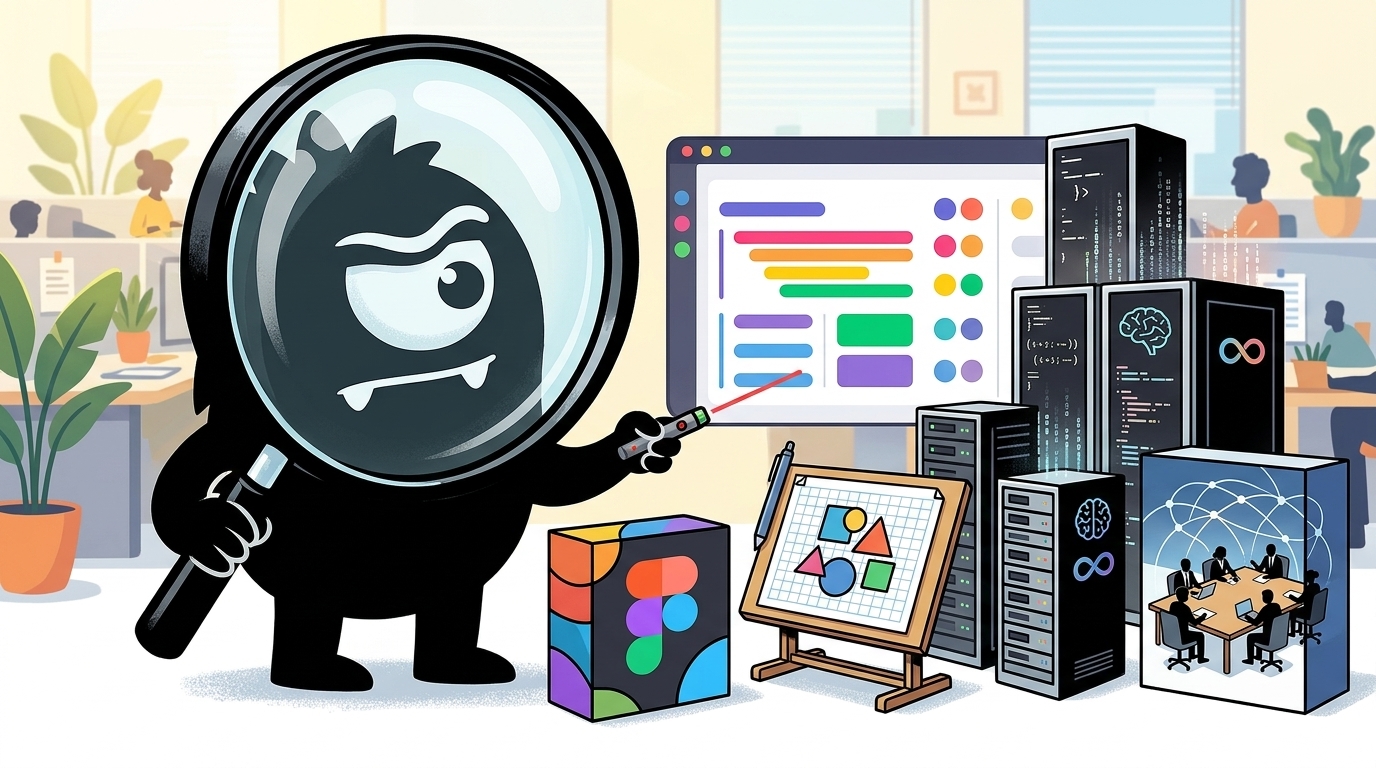
Why Figma vs Monday.com Is a Real Enterprise Question—even Though They Aren’t Direct Replacements
At first glance, this comparison looks wrong. Figma is a collaborative design platform for interface design, prototyping, design systems, and developer handoff.[2] Monday.com is an enterprise work management platform for planning, tracking, coordinating, and governing work across teams.[10] They do different jobs.
And yet enterprise buyers absolutely compare them.
Why? Because software teams don’t buy tools in neat category boxes. They buy against bottlenecks, budgets, and executive pressure to simplify the stack. Product leaders, design leaders, PMO teams, RevOps, procurement, and IT are all looking at the same collaboration budget and asking some version of the same question: What is the system our teams actually work in?
That’s why this sentiment resonates:
How is ai replacing https://monday.com/ We use @clickup for our project management software and not really seeing how ainreplaces it currently. Figma however has been a huge addition for our content team.
View on X →It also explains why Figma keeps showing up outside “design tool” conversations altogether. It has become part of the content, product, and collaboration layer for many teams, not just a pixel editor.
Color-coding ICPs/use cases like Figma, https://monday.com/ Canva, and Loom makes content clearer, more engaging, and easier to scan.
We used the same approach for a team management SaaS site last year.
Designed by Serif Studio.
So the real enterprise question is not “which tool is better?” It’s:
- Where is your delivery bottleneck?
- Which platform becomes a system of record for that bottleneck?
- Can you consolidate without damaging throughput?
If your problem is broken design collaboration, inconsistent components, weak prototyping, and bad handoff to engineering, Figma is the more relevant platform.[2] If your problem is fragmented planning, unclear ownership, low execution visibility, and weak cross-functional coordination, Monday.com is the more relevant one.[10]
For many enterprises, the uncomfortable truth is that these tools are adjacent, not interchangeable. But they do compete for attention, budget, governance review, and workflow ownership.
Adoption, Stickiness, and the Cost of Switching
In enterprise software, the best product does not automatically win. The product that is already embedded in daily workflows usually does.
That’s the core of Figma’s position in large organizations. Once teams have built shared libraries, component systems, prototypes, file structures, review habits, and design-to-dev processes around Figma, leaving becomes expensive in ways that don’t show up on a pricing sheet. Figma’s enterprise positioning is explicitly about helping teams build products at scale, with shared systems and organization-wide collaboration.[2][5]
The most concise version of that reality came from X:
For large teams Figma is already a winner, it's hard for them to migrate
Their existing systems, components, files make it impossible
That isn’t just about designer preference. It’s about organizational memory. Large enterprises may have:
- thousands of files
- mature design systems
- embedded developer handoff processes
- legal and security reviews already completed
- hiring pipelines that assume Figma literacy
That kind of adoption compounds. And the market-scale numbers matter because they signal ecosystem maturity, admin readiness, and talent familiarity—not just popularity.
Figma is doing $1B+ in revenue, growing 40% year over year, with 13 million monthly active users and 95% Fortune 500 penetration. The stock just hit $24, down 83% from its post-IPO high of $143 six months ago.
View on X →Monday.com has its own version of stickiness, but it works differently. It is often easier to pilot because a single function—product ops, PMO, marketing ops, or IT—can adopt it departmentally before pushing broader rollout. Once it becomes the place where roadmaps, dependencies, approvals, status reporting, and portfolio views live, replacing it becomes politically and operationally difficult. Monday.com’s enterprise pitch leans heavily into multi-team coordination, advanced permissions, and workflow governance for exactly that reason.[7]
What enterprises often underestimate is that replacing a design system platform and replacing a work management system are both painful—just in different ways.
- Figma switching pain = asset migration, component parity, workflow retraining
- Monday.com switching pain = process migration, ownership changes, reporting disruption, automation rewiring
The migration-inertia point was strong enough in the X conversation that it got repeated nearly verbatim more than once.
For large teams Figma is already a winner, it's hard for them to migrate Their existing systems, components, files make it impossible
View on X →That repetition matters. It reflects a practitioner truth: in large teams, “can this tool do the job?” is less important than “can we absorb the cost of changing the job around the tool?”
Where Each Platform Actually Fits in an Enterprise Software Team’s Workflow
The cleanest way to compare Figma and Monday.com is by job-to-be-done across the software delivery lifecycle.
Where Figma fits best
Figma is strongest in the upstream product-building layer:
- user flows and wireframes
- interface design
- prototyping
- design critiques and async review
- component libraries and design systems
- design-to-development handoff
Its enterprise value is not just making screens. It is creating a shared visual source of truth across design, product, and engineering.[2] That matters when teams are trying to reduce ambiguity before code gets written.
Where Monday.com fits best
Monday.com is strongest in the orchestration layer:
- initiative planning
- sprint or release coordination
- cross-functional status tracking
- resource and dependency management
- executive reporting
- governance and workflow automation
Its enterprise work management positioning is about connecting teams and operationalizing execution across departments, not just managing tasks.[10][7]
This is why the “one workspace for everything” pitch keeps surfacing in adjacent conversations. Teams are tired of bouncing among specialized tools.
Why are you still jumping between 7 apps to manage one project? Bring GitHub, Slack, Drive, Figma, and Calendar directly into your workspace. Stop the context-switching madness. https://is.team/features/integrations?ref=x-20260516
View on X →But in practice, trying to force one platform to cover both design truth and execution truth usually creates more friction than it removes. Figma is not a portfolio management platform. Monday.com is not a design system platform.
A useful model for enterprise teams is:
- Figma = system of design
- Monday.com = system of execution
That division gives each platform a clear role. Product requirements may start in docs, concepts take shape in Figma, and then delivery work gets operationalized in Monday.com. Done right, this reduces ambiguity rather than duplicating it.
The biggest failure mode is unclear ownership:
- designs tracked in Monday.com but never updated
- roadmap items linked to stale Figma files
- executives expecting one tool to answer every question
That’s where category confusion becomes expensive. Monday.com’s momentum in enterprise work management is real, but that does not make it a replacement for deep product design workflows.
Monday(.)com is quietly dominating enterprise work management.
Q1 2026 Revenue: $351M (+25% YoY)
Gross Margin: 89%
They are generating 50% more revenue than Asana and growing 3x faster. $MNDY $ASAN
If you are an enterprise software team, the question is not which vendor has more features in aggregate. It is which layer of the workflow needs the stronger source of truth.
Pricing, Seat Sprawl, and the Real Cost of Enterprise Rollout
Enterprise software teams rarely overspend because a single tool is too expensive. They overspend because too many people get provisioned into too many platforms with unclear usage expectations.
That’s exactly the complaint showing up across X:
You signed up for:
– Notion Enterprise
– https://monday.com/
– Figma Pro
– Ahrefs
– and 10 more AI tools
But only 2 people actually use them.
Figma’s pricing is transparent enough to frame the issue clearly. Enterprise full seats start at $90 per seat per month when billed annually, with lower-cost viewer and dev-oriented seat types depending on plan structure and role design.[1][4] That can be entirely reasonable for heavy daily users—designers, design engineers, and PMs deeply involved in product discovery. It becomes wasteful when organizations hand out high-tier access broadly without role discipline.
Monday.com’s enterprise plan is custom-priced rather than publicly fixed, which shifts the conversation from sticker shock to contract design, rollout scope, and governance.[7][8] In practice, that means enterprise buyers need to ask harder questions up front:
- Which roles need full workflow-building capability?
- Which users are contributors versus consumers?
- Which automations justify enterprise expansion?
- What is the annual minimum commitment?
The open-source alternative conversation around tools like Penpot is really a symptom of this broader frustration: buyers are increasingly skeptical of paying premium seat prices unless the workflow leverage is obvious.
🚨 Someone built a fully open-source Figma alternative that designers and developers actually love and it's been quietly getting better for years.
It's called Penpot and it's not a watered-down clone.
It's a full design and code collaboration platform built on open standards SVG, CSS, HTML with no vendor lock-in and no $45/month seat fees.
For ROI, the right lens is not list price. It is active role-based utility.
Figma usually shows strongest ROI when:
- design teams collaborate daily
- prototypes materially reduce rework
- design systems are central to product consistency
- dev handoff quality reduces engineering churn
Monday.com usually shows strongest ROI when:
- many non-design teams need visibility
- leadership needs portfolio reporting
- approvals and dependencies are slowing execution
- work governance matters as much as task tracking
If only a small specialist group gets daily value, Figma often wins on depth. If a broad cross-functional organization gets operational value, Monday.com often wins on reach.
Security, Governance, and Compliance: Which Platform Better Matches Enterprise Control Requirements?
For enterprise buyers, security and governance are never side issues. They are often the deal.
Figma Enterprise emphasizes centralized admin controls, security, compliance support, and governance features designed to protect assets and standardize usage across large organizations.[2][3][6] Governance+ extends that with stronger centralized protections and enforcement mechanisms for enterprise environments.[6]
Monday.com’s enterprise offering makes a similarly serious pitch, but around a different operational surface area: enterprise-grade governance, permissions, multiple SSO options, auditability, and security controls designed for large-scale work orchestration.[7] Its security documentation also highlights capabilities such as tenant-level encryption, customer-managed key options in some contexts, and broader secure configuration guidance for admins.[9][11]
This is where the evaluation should get practical, fast.
Choose Figma’s security model if your highest-risk assets are:
- product concepts
- unreleased interface designs
- brand systems
- component libraries
- sensitive UX research artifacts
Choose Monday.com’s governance model if your highest-risk workflows involve:
- cross-functional operational data
- approval flows
- enterprise-wide execution visibility
- workflow permissions and process integrity
- structured work data spanning many teams
In other words: the better security fit depends on what you are trying to control.
And sentiment from the field does matter—not as proof, but as a directional signal of trust and vendor confidence.
Next 12 Month Company Future Outlook Sentiment
(as reported by GTM professionals on RepVue)
Productivity & Collaboration Tools (min N=15)
(since April-25)
1. Notion 4.18
2. Box 4.07
3. Figma 4.04
4. ClickUp 3.97
5. monday .com 3.80
6. Workiva 3.50
7. Adobe 3.44
8. Zoom Communications 3.24
9. Canva 3.22
10. Zapier 3.20
11. Airtable 3.11
12. Asana 3.04
13. DocuSign 3.01
14. Miro 2.97
15. GoTo 2.69
16. RingCentral 2.46
17. Dropbox 2.45
18. Wrike 2.42
19. Smartsheet 2.28
20. Quickbase 2.24
In this space - who am I missing?
One nuance enterprise teams should not miss: governance burden scales differently in each tool. In Figma, governance is about consistency and protection of shared design assets. In Monday.com, governance is about process design, permissions, automations, data exposure, and workspace sprawl. Both matter, but they stress different admin muscles.
If your security team is asking “where does our product IP live before launch?”, Figma will get more scrutiny. If they are asking “how do we prevent workflow chaos and overexposed data across departments?”, Monday.com will.
AI, MCP, and Automation: How the Platforms Are Expanding Beyond Their Original Categories
The most important 2026 shift is that both platforms are being pulled into an AI-mediated workflow layer.
Figma is no longer just where humans draw interfaces. It is increasingly becoming a structured design surface that agents can read from and act on—especially where teams already have mature component libraries and design systems.[2] That changes the enterprise calculus because structured design assets become machine-usable production assets.
The sharpest articulation of that shift came from this post:
do you understand what just shipped? → AI agents can now design directly on Figma’s canvas. not cheesy mockups… or lame screenshots… real native Figma assets wired to your actual design system → the use_figma MCP tool lets Claude Code, Codex, Cursor, and 6 other coding agents write directly to your Figma files → agents read your component library first and build with what already exists… variables, tokens, auto layout, the works → skills let you teach agents HOW your team designs. a skill is just a markdown file… anyone who understands Figma can write one → also works with Copilot CLI, Copilot in VS Code, Factory, Firebender, Augment, and Warp → free during beta… usage based pricing coming later the design to code gap that’s haunted every product team just collapsed in front of our eyes. designers hand off to agents now no need to wait on developers anymore everyone can take a deep breath now if you’re building products and not connecting Figma to your agents yet, you’re leaving serious speed on the table. set this up today. you’ll thank me later
View on X →If that direction holds, Figma’s value increases with design-system maturity. Enterprises with strong tokens, variables, components, and layout conventions will be able to use AI more effectively because the design environment is already standardized. Teams with messy files and weak system discipline will see less benefit.
Monday.com’s AI-adjacent trajectory is different but just as important. The emergence of MCP apps suggests a future where work management stops being “open the app, update the board” and becomes something more interactive inside assistants, IDEs, and other work surfaces.
MCP Apps launched Jan 26: tools that return interactive HTML in sandboxed iframes. Figma, Slack, Asana, Box, Canva, Hex, https://monday.com/ on day one. Works in Claude, ChatGPT, Goose, VS Code. Tool output isn't text anymore — it's a live UI.
View on X →And this is not a one-off experiment. The broader framing is that MCP is becoming a lightweight application layer, not just an integration spec.
MCP Apps launched in January. Nobody talking about it.
MCP servers can now return interactive HTML in sandboxed iframes.
Day-one partners: Figma, Slack, Asana, Box, Canva, Hex, https://monday.com/
MCP becoming an application platform, not just a tool-integration protocol.
For enterprise software teams, that means the next evaluation criteria should include:
- Agent interoperability
Can the platform expose useful structured context to AI systems?
- Human-in-the-loop governance
Can users review, approve, and constrain agent actions?
- Workflow surface area
Does the tool support only data exchange, or interactive task completion?
- Policy control
Can admins manage how automation and agents interact with sensitive workflows?
Figma’s AI future is strongest where design work itself is the bottleneck. Monday.com’s AI future is strongest where coordination and execution overhead are the bottleneck. Those are different enterprise bets.
The strategic takeaway: don’t evaluate either platform as if its 2024 category definition still fully applies.
Market Momentum vs Buying Confidence: What Enterprise Teams Should Ignore—and What They Should Watch
X is full of contradictory market signals. On one hand, practitioners cite serious growth, enterprise expansion, and product traction. On the other, people point to brutal stock drawdowns and ask whether these companies are vulnerable.
Both things can be true at once.
For Figma, the more relevant signal is not short-term stock volatility. It is persistent customer expansion, large-scale usage, and deep enterprise penetration.
Figma makes the software designers use to build apps and websites. Investors have spent nine months betting AI would make it useless. The stock has fallen 85%. Its customers are paying Figma 39% more this year than last.
View on X →For Monday.com, the strongest signal is that it has moved beyond the “pretty task board” stereotype and established itself as a credible enterprise work management platform with real revenue scale and margins.
Surviving the SaaS-pocalypse: Who Makes It Out Alive? Drawdowns from 52-week highs 👇 $FIG (Figma) −85% $RPD (Rapid7) −80% $DUOL (Duolingo) −79% $MNDY (monday com) −77% $TEAM (Atlassian) −73% $HUBS (HubSpot) −72% $WIX (Wix com) −70% $INTA (Intapp) −70% $ASAN (Asana) −69% $AI (C3 ai) −69% $FIVN (Five9) −67% $PD (PagerDuty) −66% $U (Unity Software) −62% $KVYO (Klaviyo) −61% $FRSH (Freshworks) −61%
View on X →Enterprise buyers should mostly ignore market mood swings unless they reflect something operationally meaningful, such as:
- shrinking enterprise commitment
- stalled roadmap delivery
- weakening security posture
- customer churn in the target segment
- failure to support required governance models
They should pay attention to:
- product fit for the workflow
- retention and expansion signals
- admin and security maturity
- ecosystem and integration depth
- evidence of long-term platform investment
A falling stock is not your main risk. Buying the wrong system of record is.
Final Verdict: Who Should Choose Figma, Who Should Choose Monday.com, and When Enterprise Teams Need Both
If you force this into a winner-take-all comparison, you will make a bad enterprise decision.
Choose Figma if your core bottleneck is product design throughput
Figma is the better choice when your biggest problem is how ideas become clear, testable, buildable product artifacts. It is strongest for:
- design collaboration
- prototyping
- design systems
- developer handoff
- reducing ambiguity before engineering starts[1][2]
It is especially hard to displace in large organizations once systems and files are embedded.
Choose Monday.com if your core bottleneck is cross-functional execution
Monday.com is the better choice when your biggest problem is not what to design, but how to align teams around shipping. It is strongest for:
- portfolio visibility
- workflow coordination
- approvals and dependencies
- governance and permissions
- execution reporting across teams[7][8]
If leaders need one place to understand who owns what, what is blocked, and what is late, Monday.com has the more natural enterprise footprint.
Use both if you need a design layer and an execution layer
Many enterprise software organizations will need both. In that model:
- Figma owns the product artifact layer
- Monday.com owns the execution and operating layer
That combination works well only if ownership is explicit. Don’t duplicate roadmap truth in Figma. Don’t turn Monday.com into a pseudo-design repository. Connect them, but keep the source of truth clear.
And if you need a final tie-breaker, use this rule:
- If bad design alignment is causing rework, buy Figma first.
- If bad coordination is causing slippage, buy Monday.com first.
Monday.com’s enterprise growth is real.
Monday(.)com is quietly dominating enterprise work management.
Q1 2026 Revenue: $351M (+25% YoY)
Gross Margin: 89%
They are generating 50% more revenue than Asana and growing 3x faster. $MNDY $ASAN
Figma’s enterprise entrenchment is real too. Those are not opposing facts; they describe two different control points in modern software delivery.
For enterprise software teams in 2026, the best platform is the one that fixes your most expensive source of friction—and the best stack is the one where design truth and execution truth reinforce each other instead of competing.
Sources
[2] Figma Enterprise | Building Great Products at Scale
[3] Figma Security | Peace of Mind by Design
[5] Enterprise plan overview — Figma Help Center
[6] Governance+ for Figma Enterprise
[8] Plans and pricing for monday.com
[9] Security — monday.com Trust Center
References (15 sources)
- Plans & Pricing - figma.com
- Figma Enterprise | Building Great Products at Scale - figma.com
- Figma Security | Peace of Mind by Design - figma.com
- Figma plans and features - help.figma.com
- Enterprise plan overview - help.figma.com
- Governance+ for Figma Enterprise - help.figma.com
- monday.com for Enterprise | monday.com - monday.com
- Plans and pricing for monday.com - support.monday.com
- Security - monday.com
- Work Management Software for Enterprise - monday.com
- monday.com secure configuration checklist - support.monday.com
- FAQs - Security and Privacy - monday.com
- Figma vs. monday.com - trustradius.com
- Monday.com and Figma, An In-Depth Comparison 2026 - cuspera.com
- Figma: The Collaborative Interface Design Tool - figma.com
Related Guides

Perplexity AI vs Meta Llama: Which Is Best for Data Analysis and Reporting in 2026?
19 min read
Notion vs Webflow: Which Is Best for AI Pair Programming in 2026?
15 min read
What Is Vercel? A Complete Guide for 2026
18 min read
What Is Supabase? A Complete Guide for 2026
18 min read