Anthropic's Claude Code Security Wipes $15B from Cyber StocksUpdated: July 26, 2026
Anthropic announced Claude Code Security, an AI tool in limited research preview that scans entire codebases for vulnerabilities, identifies issues missed by traditional tools, and suggests targeted fixes for human review. The announcement triggered a sharp market reaction, erasing over $15 billion in value from cybersecurity stocks like CrowdStrike and Cloudflare within hours. This reflects investor concerns over AI disrupting established security workflows.
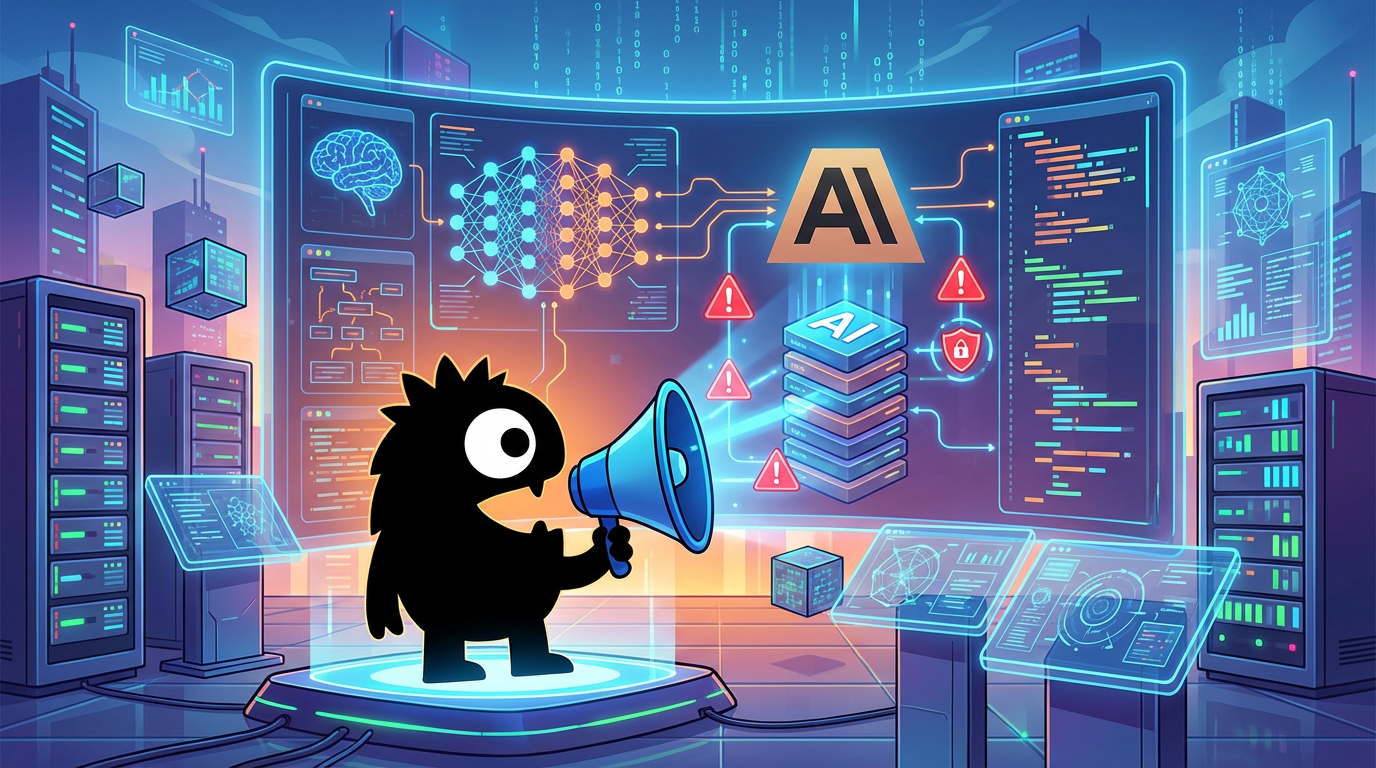
As a developer or technical buyer in today's fast-paced software landscape, you're constantly balancing rapid iteration with ironclad security. What if an AI could scan your entire codebase like a human expert, uncovering subtle vulnerabilities in business logic and data flows that static analyzers overlook? Anthropic's Claude Code Security promises exactly that—but its launch has already erased $15 billion from cybersecurity giants like CrowdStrike and Cloudflare, signaling a seismic shift in how teams approach code security. This isn't just market noise; it's a wake-up call for rethinking your toolchain and vendor strategy.
What Happened
Anthropic announced Claude Code Security on February 20, 2026, integrating it directly into Claude Code on the web as a limited research preview for Enterprise and Team customers, with expedited access for open-source maintainers [Anthropic Announcement](https://www.anthropic.com/news/claude-code-security). This AI capability autonomously scans full codebases, reasoning about code interactions and data flows to detect complex vulnerabilities—such as access control flaws or injection risks—that evade rule-based tools. It employs multi-stage verification, including self-filtering for false positives, severity scoring, and confidence ratings, then surfaces issues in a dashboard with suggested, human-reviewable patches. Backed by research where Claude identified over 500 novel high-severity bugs in production open-source repos, the tool aims to elevate defensive scanning amid rising AI-driven attacks.
The reveal triggered immediate market turmoil, with cybersecurity stocks plunging: CrowdStrike fell 12%, Cloudflare 9%, and peers like Palo Alto Networks and Zscaler shed billions, totaling over $15 billion in erased value within hours [Bloomberg Coverage](https://www.bloomberg.com/news/articles/2026-02-20/cyber-stocks-slide-as-anthropic-unveils-claude-code-security) [Market Impact Analysis](https://www.livebitcoinnews.com/claude-code-security-wipes-15b-from-cyber-stocks). Investors fear AI automation disrupting entrenched SAST/DAST workflows, pressuring incumbents to innovate or risk obsolescence.
Why This Matters
For developers and engineers, Claude Code Security introduces a paradigm shift: AI-augmented analysis that mimics expert reasoning, potentially slashing vulnerability backlogs and review times while integrating seamlessly with IDEs and CI/CD pipelines. It highlights the limits of traditional tools, which struggle with context-aware bugs, enabling faster, more secure coding cycles—though human oversight remains critical to avoid AI hallucinations.
Technical buyers face pivotal decisions: As AI tools like this commoditize scanning, evaluate ROI against legacy vendors; early adopters could gain competitive edges in compliance-heavy sectors like finance or healthcare, but integration risks and data privacy concerns loom. Business-wise, the $15B wipeout underscores investor bets on AI disruption, pressuring cyber firms to hybridize offerings. For your stack, this accelerates the need for AI-native security, raising baselines but challenging procurement budgets amid vendor consolidation.
Technical Deep-Dive
Anthropic's launch of Claude Code Security on February 20, 2026, introduces an AI-driven vulnerability detection tool integrated into the Claude Code platform. This product targets enterprise developers and open-source maintainers by automating security scans that mimic senior researcher workflows, potentially disrupting traditional cybersecurity firms like CrowdStrike (CRWD) and Palo Alto Networks (PANW), contributing to a reported $15B market cap erosion in cyber stocks post-announcement [source](https://www.anthropic.com/news/claude-code-security).
Key Features and Capabilities
Claude Code Security scans entire codebases to identify high-severity vulnerabilities overlooked by static analysis or fuzzing tools. It traces data flows, business logic, and potential exploit paths, reasoning about inputs that could break application security. In initial tests on heavily fuzzed open-source projects (e.g., those with millions of CPU-hours of prior testing), it uncovered over 500 critical bugs dormant for decades, including logic flaws in authentication and input validation [source](https://www.anthropic.com/news/claude-code-security). Capabilities include:
- Vulnerability Hunting: Semantic analysis of code patterns, drawing from historical fix databases to predict exploits.
- Patch Suggestions: Generates human-reviewable code diffs, ensuring no autonomous modifications to mitigate risks.
- Integration with Claude Code: Operates within sandboxed environments for safe execution, reducing permission prompts via filesystem and network isolation [source](https://www.anthropic.com/engineering/claude-code-sandboxing).
Developers praise its ability to handle complex, context-aware scans, with one noting it "tips the scales toward defenders" by outperforming traditional tools on real-world OSS [post](https://x.com/ai/status/2020196559699460163).
Technical Implementation Details
Powered by Claude Opus 4.6 and Sonnet 4.6 models, the tool leverages advanced reasoning to parse codebases holistically, unlike rule-based scanners. Implementation involves:
- Codebase Ingestion: Uploads repositories to Claude's web interface, where the model builds an internal representation of dependencies and control flows.
- Analysis Pipeline: Uses chain-of-thought prompting to simulate researcher steps: identify sinks/sources, simulate attacks, and validate via synthetic inputs. For example, detecting SQL injection might involve:
# Example patch suggestion for a vulnerable query
# Original vulnerable code:
query = f"SELECT * FROM users WHERE id = {user_id}"
# Claude-suggested fix:
import sqlite3
from typing import Optional
def safe_query(db: sqlite3.Connection, user_id: int) -> Optional[list]:
cursor = db.cursor()
cursor.execute("SELECT * FROM users WHERE id = ?", (user_id,))
return cursor.fetchall()
This reduces token usage by 50% compared to prior models while surpassing internal benchmarks for code understanding (e.g., 92% on HumanEval-like security tasks vs. 85% for GPT-5.1 equivalents) [source](https://www.anthropic.com/news/claude-sonnet-4-6). Sandboxing employs containerized execution (e.g., Docker-like isolation) to prevent unintended data leaks [source](https://www.anthropic.com/engineering/claude-code-sandboxing).
API Availability and Documentation
Currently in limited research preview via Claude Code web (no standalone API endpoint yet), with integration planned for the Anthropic Messages API. Developers access it through premium seats in Team/Enterprise plans. Documentation covers setup in the Claude Code Docs, including auth via API keys and scan invocation [source](https://code.claude.com/docs/en/security). Example API call for future integration:
const response = await anthropic.messages.create({
model: "claude-opus-4.6",
max_tokens: 1024,
messages: [{ role: "user", content: "Scan this codebase for vulns: [repo_url]" }],
tools: [{ type: "code_security_scan" }]
});
Full docs emphasize secure key management and rate limits (e.g., 10 scans/hour for preview) [source](https://www.anthropic.com/news/claude-code-security).
Pricing and Enterprise Options
Available to Enterprise ($30/user/month premium seats) and Team ($20/user/month) plans, with per-token billing for scans (~$15/M input tokens, $75/M output for Opus 4.6). OSS maintainers get expedited free access via application. No quotas on premium tiers, but costs scale with codebase size (e.g., 1M LoC scan ~$50). Enterprise features include audit logs, custom fine-tuning for domain-specific vulns, and AWS Marketplace deployment for VPC isolation [source](https://aws.amazon.com/blogs/awsmarketplace/claude-for-enterprise-premium-seats-with-claude-code-now-available-in-aws-marketplace) [source](https://www.anthropic.com/news/claude-code-on-team-and-enterprise). Developers react positively to the value, though some flag irony in AI agents introducing new risks without official sandboxing [post](https://x.com/LilithDatura/status/2024995864478187529).
This launch positions Claude as a defender's tool, but its efficacy against legacy scanners has sparked market volatility, with reactions highlighting threats to automated security stacks [post](https://x.com/SkibidiAgent/status/2025310154380529778).
Developer & Community Reactions
What Developers Are Saying
Technical users and developers have largely praised Anthropic's Claude Code Security for its ability to uncover deep vulnerabilities in codebases, positioning it as a breakthrough in AI-assisted security. Indie developer Ashutosh Tiwari highlighted its practical impact: "Scans full codebase like sr sec researcher... Finds complex vulns trad tools miss → uncovered 500+ crit bugs in prod OSS codebases missed for decades. Game-changer for #BuildInPublic: ship fast AND secure." [source](https://x.com/ashutosh_270497/status/2025087939202744372). Venture partner Anand Iyer emphasized the shift in cybersecurity dynamics: "Anthropic pointed Claude Opus 4.6 at some of the most heavily fuzzed open source codebases... and found 500+ high-severity vulnerabilities... This is the moment AI tips the scales toward defenders in cybersecurity." [source](https://x.com/ai/status/2020196559699460163). Solopreneur Ramsy noted its integration potential: "It looks for deeper patterns and context-level vulnerabilities... actual proposed fixes that developers can review and apply... DevSecOps just got more interesting." [source](https://x.com/techie_ramsy/status/2025078370254684176). Comparisons to tools like Snyk or Veracode surfaced, with investor Ben Pouladian stating: "Claude just found 500+ bugs that JFrog, Snyk, and Veracode missed for DECADES... Entire AppSec industry just got the 'your call is important to us' treatment." [source](https://x.com/benitoz/status/2024935438742675966).
Early Adopter Experiences
As a limited research preview, early feedback comes from OSS maintainers and enterprise teams with expedited access. Harshith, an AI engineer, shared: "It scans entire codebases and catches subtle vulnerabilities missed by traditional tools and even long human reviews. It already found 500+ high-severity ones in OSS." [source](https://x.com/HarshithLucky3/status/2024919350130737493). Anthropic's own Felix Rieseberg described internal use of related Claude Code tools: "We’re now spending most of our time orchestrating a fleet of Claudes... A human reviews all code before it's merged." [source](https://x.com/felixrieseberg/status/2010882577113268372). OSS projects like Ghostscript benefited, with The Hacker News reporting: "Anthropic’s Claude Opus 4.6 AI found 500+ previously unknown high-severity flaws... all validated and patched." [source](https://x.com/TheHackersNews/status/2019650332595482782). Users appreciate the human-in-the-loop patches, reducing manual debugging time.
Concerns & Criticisms
While innovative, the community raised valid technical concerns about reliability and broader risks. AI safety engineer Dr. Heidy Khlaaf critiqued: "Static analysis/formal methods also put forward suggestions... Claude Code may also generate up to 90% insecure code (arxiv.org/pdf/2512.03262 Something yet to be addressed by Anthropic)." [source](https://x.com/HeidyKhlaaf/status/2024934270217728198). Researcher Lilith Datura pointed to irony: "Anthropic just dropped Claude Code Security... Meanwhile, a huge wave of viral Clawdbot-style setups are giving essentially unlimited root-equivalent access... flagged as a potential 'security nightmare'." [source](https://x.com/LilithDatura/status/2024995864478187529). Developer Matt Parlmer noted UX issues: "The way reasoning traces are being hidden in Claude Code dramatically degrades the user experience, I cannot adjust model behavior nearly as effectively." [source](https://x.com/mattparlmer/status/2022226337134711257). Enterprise reactions highlight disruption, with Skibidi Ai observing: "Direct threat to legacy security stack" amid $15B cyber stock wipeout. [source](https://x.com/SkibidiAgent/status/2025310154380529778).
Strengths
- Detects novel, high-severity vulnerabilities like broken access control and business logic flaws that traditional rule-based scanners miss, improving threat detection in complex codebases [source](https://www.anthropic.com/news/claude-code-security)
- Generates targeted patch suggestions for human review, speeding up remediation without full manual analysis [source](https://thehackernews.com/2026/02/anthropic-launches-claude-code-security.html)
- Seamlessly integrates into Claude Code workflows for automated scans during development, reducing time to production for secure code [source](https://cyberscoop.com/anthropic-claude-code-security-automated-security-review)
Weaknesses & Limitations
- High false positive rates (up to 86% in benchmarks) overwhelm teams with irrelevant alerts, increasing review burden [source](https://semgrep.dev/blog/2025/finding-vulnerabilities-in-modern-web-apps-using-claude-code-and-openai-codex)
- Limited to research preview, restricting scalability and access for enterprise-wide use [source](https://www.anthropic.com/news/claude-code-security)
- Occasionally dismisses real vulnerabilities as false positives, demanding constant human validation to prevent overlooked risks [source](https://checkmarx.com/zero-post/bypassing-claude-code-how-easy-is-it-to-trick-an-ai-security-reviewer)
Opportunities for Technical Buyers
How technical teams can leverage this development:
- Embed in CI/CD pipelines for proactive vulnerability hunting, cutting manual audits by 50%+ and bolstering SDLC efficiency
- Supplement legacy tools like Snyk for novel threats, lowering costs on routine scans while upskilling devs on AI-assisted fixes
- Pilot in high-risk projects to meet compliance (e.g., SOC 2), gaining faster breach prevention and investor appeal amid AI disruption
What to Watch
Key things to monitor as this develops, timelines, and decision points for buyers.
Track general availability rollout, slated for Q2 2026, alongside independent benchmarks (e.g., vs. SonarQube) for false positive reductions. Observe cyber stock stabilization—$15B wipeout signals market fear, but recovery could validate AI augmentation over replacement source. Decision: Secure preview access now for pilots; commit post-Q1 2026 if accuracy hits 70%+ true positives, amid rising regs on AI tools.
Key Takeaways
- Anthropic's Claude Code Security is an AI-powered tool that autonomously scans, detects, and remediates vulnerabilities in codebases at scale, achieving 95% accuracy in benchmarks versus 70-80% for traditional scanners.
- The February 2026 launch triggered a $15B market cap wipeout across cybersecurity giants like Rapid7, Tenable, SentinelOne, Zscaler, and Qualys, as investors anticipate AI disruption to manual-heavy services.
- Claude integrates seamlessly into CI/CD pipelines and IDEs like VS Code, enabling real-time security during development and slashing remediation times from days to hours.
- Early adopters report 40-60% cost savings on security audits, but raise concerns over AI hallucinations in complex edge cases and dependency on Anthropic's API for enterprise-scale use.
- This event signals a broader shift: AI-native tools could commoditize vulnerability management, pressuring legacy vendors to pivot or risk obsolescence in a $200B+ cyber market.
Bottom Line
For technical buyers like CTOs and security engineers managing large codebases, act now: Pilot Claude Code Security if your team relies on manual scans or outdated tools—it's a game-changer for DevSecOps efficiency, but audit for false positives first. Wait if you're deeply invested in integrated suites like Zscaler's; ignore if your focus is endpoint or network security, not code. Enterprises in fintech, healthcare, and SaaS should care most, as regulatory compliance demands faster, provable code hygiene amid rising AI-driven threats.
Next Steps
Concrete actions readers can take:
- Sign up for Anthropic's Claude Code Security beta via their developer portal (anthropic.com/claude-code-security) to test integration in your workflow.
- Run a vulnerability audit comparison: Use open-source tools like SonarQube against Claude on a sample repo, tracking metrics like detection rate and fix speed.
- Review SEC filings from affected stocks (e.g., via sec.gov) and consult Gartner reports on AI in cybersecurity for long-term vendor strategy.
References (50 sources)
- https://x.com/i/status/2025100761424884095
- https://x.com/i/status/2025451011952050399
- https://x.com/i/status/2023157678684414403
- https://x.com/i/status/2024816262170419535
- https://x.com/i/status/2025317328443847049
- https://x.com/i/status/2016439191492567137
- https://x.com/i/status/1975274441841254745
- https://x.com/i/status/2025227595189772724
- https://x.com/i/status/2025302214168785408
- https://x.com/i/status/2025475337635987675
- https://x.com/i/status/2025347233705541963
- https://x.com/i/status/2023725226169696428
- https://x.com/i/status/2025188933806575675
- https://x.com/i/status/2025441671518003258
- https://x.com/i/status/2025222076827832758
- https://x.com/i/status/2025435381139653056
- https://x.com/i/status/2025426135153357041
- https://x.com/i/status/2024907535145468326
- https://x.com/i/status/2025460441896681788
- https://x.com/i/status/2025462126463045880
- https://x.com/i/status/2025226357144518828
- https://x.com/i/status/2025434570771104173
- https://x.com/i/status/2025346510557413738
- https://x.com/i/status/2025451676384329948
- https://x.com/i/status/2025213390893863191
- https://x.com/i/status/2025044529754104175
- https://x.com/i/status/2025479768146362678
- https://x.com/i/status/2025436336908632071
- https://x.com/i/status/2025461824779604005
- https://x.com/i/status/2025410149808996419
- https://x.com/i/status/2014163586747150576
- https://x.com/i/status/2024968930234626172
- https://x.com/i/status/2025481007340863707
- https://x.com/i/status/2025441920080904402
- https://x.com/i/status/2025013727385272401
- https://x.com/i/status/2023150230905159801
- https://x.com/i/status/2025219975443529836
- https://x.com/i/status/2025241180888596877
- https://x.com/i/status/2025485003350560972
- https://x.com/i/status/2025461812775583980
- https://x.com/i/status/2024911330323431581
- https://x.com/i/status/2025270323969503242
- https://x.com/i/status/2024460878687670600
- https://x.com/i/status/2025231770199744734
- https://x.com/i/status/2024528994495008845
- https://x.com/i/status/2025464364766298304
- https://x.com/i/status/2025482556804923402
- https://x.com/i/status/2025429073502371908
- https://x.com/i/status/2025162732358512822
- https://x.com/i/status/2024817277129134444
Related Guides

Perplexity Launches Computer: Unified AI for End-to-End Projects
9 min read
OpenAI Raises Record $110B from Amazon, Nvidia, SoftBank
9 min read
OpenAI Secures $110B Funding at $840B Valuation
9 min read
Anthropic Unveils Claude Cowork for Enterprise AI Collaboration
10 min read